
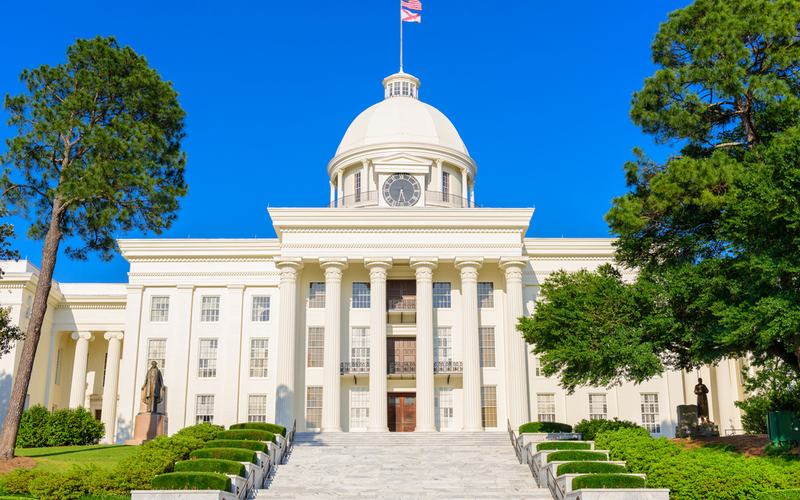
Alabama's Republican-led Senate has advanced legislation allowing special primary elections in congressional and legislative races if the U.S. Supreme Court weakens or repeals Section 2 of the Voting Rights Act (VRA), a move that could enable the GOP-controlled legislature to redraw maps post-filing deadlines and potentially flip the state’s two Democratic-held congressional seats back to red, securing a 7-0 Republican delegation ahead of the 2026 midterms. The bill, which cleared a Senate committee on January 21, 2026, is a direct contingency plan anticipating favorable Supreme Court rulings in cases like Louisiana v. Callais, which could limit race-conscious districting and pave the way for more aggressive partisan maps.
Pre-filed by Senate President Pro Tem Garlan Gudger (R-Cullman), the legislation would require Gov. Kay Ivey to call special primaries within five days if district lines change after the regular primary schedule, with new elections completed by the end of August. Any prior primary results in affected districts would be voided, allowing contests under revised boundaries. This mechanism is designed to prevent election chaos while giving Republicans flexibility to act quickly if Section 2 protections against minority vote dilution are narrowed or eliminated.
Section 2 of the VRA has long shaped redistricting, requiring maps that preserve minority voting strength and resulting in majority-minority districts in states like Alabama. The Supreme Court’s 2023 Allen v. Milligan ruling upheld Section 2, forcing Alabama to redraw its congressional map and creating a second district where Black voters could elect a preferred candidate, producing two Democratic-held seats (AL-2 and AL-7). Republicans argue that race-based map considerations amount to unconstitutional gerrymandering, and a favorable Supreme Court decision could allow the legislature to revert to more compact, GOP-friendly lines.
Conservatives view the bill as smart contingency planning. If the Court rules favorably, Alabama could redraw maps to consolidate Democratic-leaning areas, potentially returning the delegation to a 7-0 Republican split. The special primary provision ensures changes can occur even after candidate filing deadlines (January 23, 2026, for the May 19 primary), avoiding logistical problems while maximizing partisan advantage.
With the primary already set for May 2026 and general elections in November, the legislation positions Republicans to capitalize on a potential Supreme Court victory without disrupting the overall election calendar. If passed and signed, it would provide a clear pathway for map changes, and a potential net gain of two House seats—in a cycle where control of Congress could hinge on just a few districts nationwide.

Comments
No comments yet. Be the first to share your thoughts.