
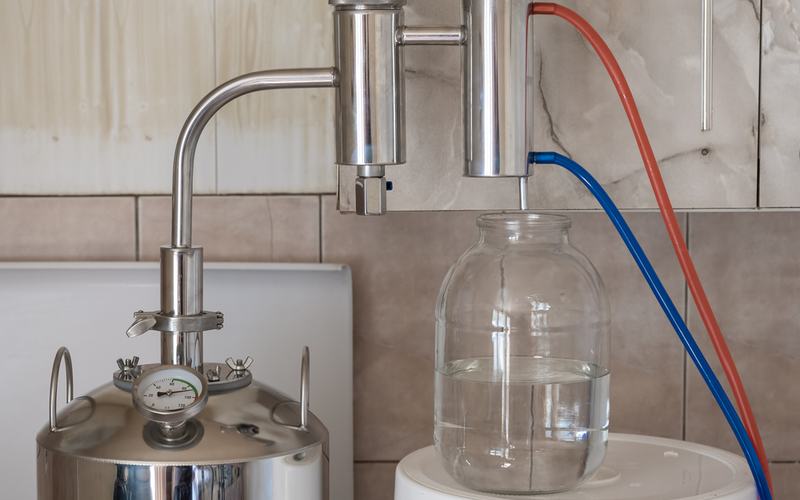
A federal appeals court struck down a nearly 158-year-old ban on home distilling Friday, declaring it an unconstitutional overreach of Congress's taxing power.
The 5th U.S. Circuit Court of Appeals in New Orleans ruled in favor of the Hobby Distillers Association and four members: Scott McNutt, Rick Morris, Thomas O. Cowdrey III and John Prince III. Circuit Judge Edith Hollan Jones wrote the opinion for the three-judge panel, which included Judges Kurt D. Graves and David S. Morales.
The statutes at issue, 26 U.S.C. §§ 5178(a)(1)(B) and 5601(a)(6), prohibit distilling beverage alcohol at home without a permit, a felony punishable by up to five years in prison and a $10,000 fine. Enacted in July 1868 during Reconstruction, the ban aimed to prevent liquor tax evasion.
Jones wrote that the prohibition reduces tax revenue by preventing production altogether, rather than regulating it to enable collection, as with commercial distilleries. She rejected the government's argument that the ban is necessary and proper to its taxing authority, noting it lacks a limiting principle and could justify criminalizing any hard-to-tax in-home activity, such as remote work.
"Without any limiting principle, the government’s theory would violate this court’s obligation to read the Constitution carefully to avoid creating a general federal authority akin to the police power," Jones wrote.
The ruling affirmed a July 2024 decision by U.S. District Judge Mark Pittman in Fort Worth, Texas, who had issued an injunction but stayed it pending appeal. The appeals court confirmed standing for all plaintiffs, including the association's 1,300 members who seek to distill for personal use or hobby, such as one member's apple-pie vodka recipe.
The Hobby Distillers Association, founded in 2013 by Rick Morris, advocates for legalization after congressional efforts stalled. Federal law already allows homebrewing beer and wine.
Devin Watkins, a lawyer for the association, called the decision significant for federal power limits. Andrew Grossman, who argued the appeal, described it as "an important victory for individual liberty."
The U.S. Department of Justice and Alcohol and Tobacco Tax and Trade Bureau offered no immediate comment. The government has 90 days to appeal to the Supreme Court. The ruling does not immediately legalize home distilling nationwide, as state laws apply and federal licensing requirements may persist.

Comments
No comments yet. Be the first to share your thoughts.