
NASA's Artemis II astronauts entered a planned communications blackout Monday evening as their Orion spacecraft flew around the far side of the Moon. The agency lost signal with the crew at approximately 6:44 p.m. EDT, with communications expected to resume around 7:25 p.m. EDT. This marked the first time humans had ventured behind the Moon since the Apollo missions more than 50 years ago.
The four-person crew, Commander Reid Wiseman, Pilot Victor Glover, Mission Specialist Christina Koch, all from NASA, and Mission Specialist Jeremy Hansen from the Canadian Space Agency, began a seven-hour lunar flyby earlier in the day. The observation period started at 2:45 p.m. EDT, allowing the astronauts to capture high-resolution images and share live views of the lunar surface. Orion passed within about 5,800 miles of the Moon's far side, providing unprecedented vistas of the cratered terrain never directly observed by human eyes.
Earlier Monday, at 1:56 p.m. EDT, Artemis II broke the record set by Apollo 13 in 1970 for the farthest distance traveled from Earth by humans. The spacecraft had entered the Moon's gravitational sphere of influence the previous day, setting the stage for the flyby.
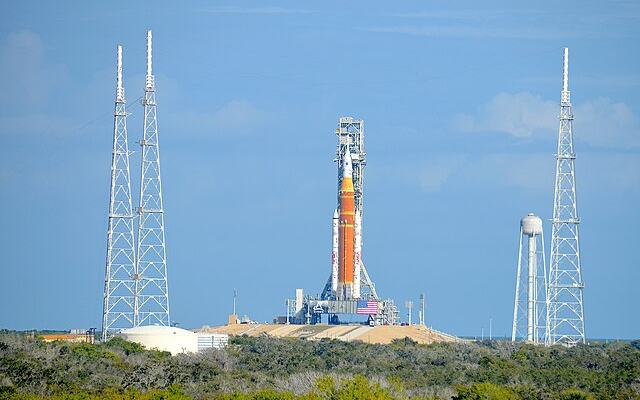
Artemis II launched successfully on April 1, 2026, at 6:24 p.m. EDT from Launch Complex 39B at Kennedy Space Center in Florida. The mission lifted off aboard the agency’s Space Launch System rocket, marking the first crewed flight of the Artemis program and the first human lunar voyage since Apollo 17 in 1972. The 10-day test flight validates Orion’s systems for deep space travel, including life support, propulsion, and reentry capabilities, paving the way for future lunar landings.
Before the flyby, the crew completed key maneuvers, such as the perigee raise burn shortly after launch and outbound trajectory corrections. NASA held daily briefings, confirming all systems nominal. Live streams from Orion showed the growing Moon in the windows, with astronauts describing the view as awe-inspiring.
The blackout occurs because the Moon physically blocks radio signals between Orion and Earth-based antennas. Mission controllers monitored telemetry until signal loss and prepared to reacquire it precisely on schedule. NASA emphasized the event was fully anticipated, with the crew trained to operate autonomously during such periods.
Following the flyby, Orion will depart lunar vicinity and head back to Earth, targeting splashdown in the Pacific Ocean off San Diego around April 10. The mission supports NASA's goals of sustainable lunar exploration and preparation for Mars, with Artemis III planned to land astronauts on the Moon in 2028.

Comments
No comments yet. Be the first to share your thoughts.