
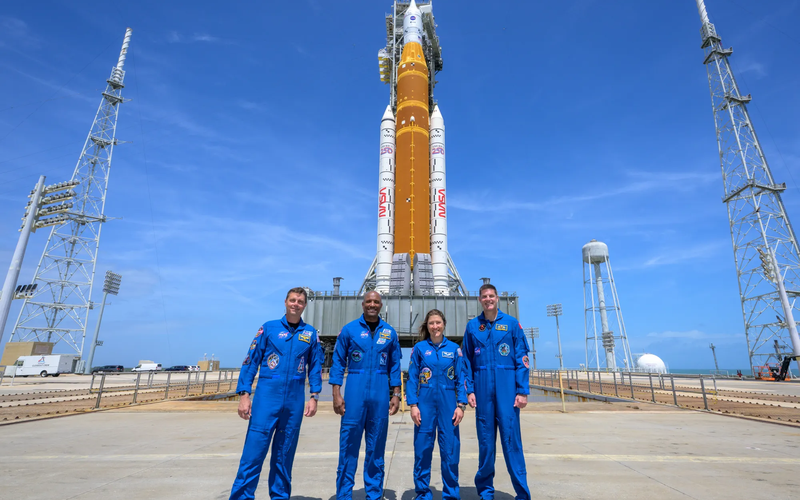
NASA's Artemis II astronauts splashed down in the Pacific Ocean off San Diego's coast at 8:10 p.m. EDT on Friday, April 10, successfully concluding the agency's first crewed lunar mission in more than 50 years. The Orion spacecraft, carrying Commander Reid Wiseman, Pilot Victor Glover, Mission Specialist Christina Koch, and Canadian Space Agency astronaut Jeremy Hansen, endured peak reentry heating and deployed parachutes before touching down for recovery by the U.S. Navy's USS John P. Murtha.
The mission launched on April 1 at 6:35 p.m. EDT from Kennedy Space Center in Florida atop the Space Launch System rocket, propelling the crew on a roughly 10-day test flight. During the journey, the astronauts conducted tests of Orion's systems, captured images of the Moon's far side, and traveled farther from Earth than any humans since Apollo. The closest lunar approach occurred on April 6.
On Flight Day 9, Thursday, the crew stowed gear, adjusted seats for reentry, and performed trajectory correction burns to fine-tune their path home. Reentry peaked at about 23,864 mph with up to 3.9 Gs of deceleration, followed by a brief communications blackout. Recovery teams extracted the crew within two hours for medical checks and transport to Houston.
Artemis II was built on the uncrewed Artemis I flight in 2022, validating deep-space capabilities for future Moon landings and Mars missions. NASA officials held daily briefings throughout, confirming all systems performed nominally. The crew held a news conference from orbit on Thursday.
Post-mission analysis will inform Artemis III, targeting a lunar landing. Live coverage of the splashdown drew global viewers, underscoring renewed interest in human spaceflight.

Comments
No comments yet. Be the first to share your thoughts.