
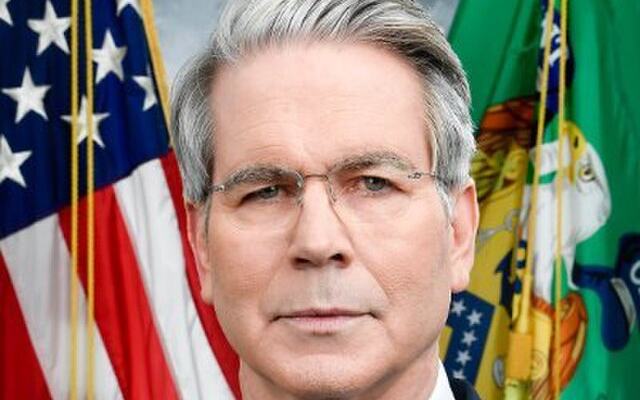
Treasury Secretary Scott Bessent on Tuesday dismissed claims that President Trump’s upcoming meeting with China could be postponed if Beijing did not secure the Strait of Hormuz.
“There’s a false narrative out there,” Bessent said. “If the meetings are delayed, it wouldn’t be delayed because the President has demanded that China police the Strait of Hormuz. If the meeting for some reason is rescheduled, it would be rescheduled because of logistics. The President wants to remain in D.C. to coordinate the war effort, and traveling abroad at a time like this may not be optimal.”
Bessent traveled to Paris on Sunday to meet Chinese Vice Premier He Lifeng, setting the stage for President Trump’s state visit to Beijing at the end of March. Discussions focused on China’s purchase commitments and the administration’s new tariff regime.
The remarks follow Beijing’s rejection of Trump’s proposal that China deploy warships to reopen the strategic Strait of Hormuz, a key global oil route. Chinese officials emphasized avoiding escalation and protecting regional stability. Analysts say Iran is unlikely to be a central topic during the talks, which will focus primarily on tariffs.
Following the Supreme Court’s overturning of Trump’s broad tariffs under the International Emergency Economic Powers Act (IEEPA), the administration is turning to other trade measures, including Section 122 and Section 301 tariffs, to reshape U.S.-China trade. Section 122 allows temporary tariffs for 150 days, while Section 301 requires a formal U.S. Trade Representative investigation.
Bessent said the administration’s ultimate goal is to reshore strategic manufacturing to the U.S. while maintaining limited economic engagement with China. “At the end of the day, we want to reshore manufacturing in the US, especially strategic manufacturing,” he said.

Comments
No comments yet. Be the first to share your thoughts.