
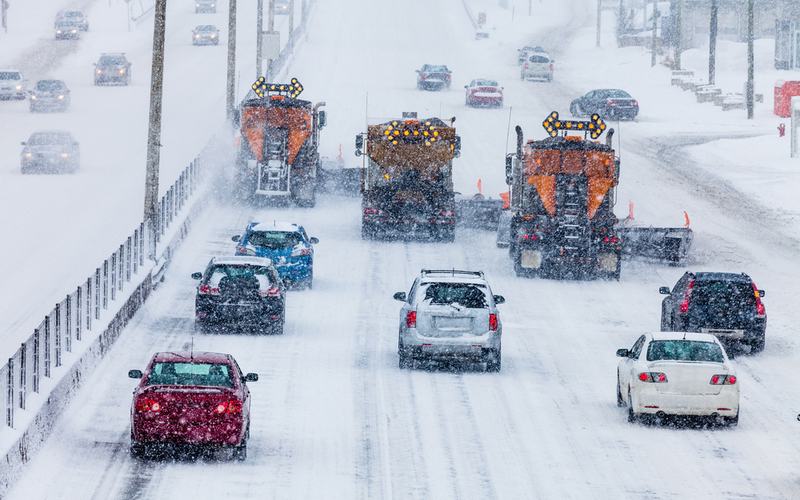
A powerful bomb cyclone swept through the Northeast from Sunday into Monday, grounding thousands of flights, leaving more than 600,000 residents without power, and dumping up to three feet of snow in some areas, meteorologists reported.
Airlines faced widespread disruptions as more than 8,000 flights were canceled or delayed on Monday alone, representing roughly 19% of U.S. air travel, far above the usual daily rate of about 1%, according to flight analytics firm Cirium. By Tuesday afternoon, cancellations had decreased to around 7% as carriers worked to resume operations.
Major airlines issued updates on recovery efforts. United Airlines and American Airlines resumed flights at key airports, including Reagan National in Washington, D.C., Philadelphia, and later at New York’s LaGuardia and JFK, as well as Boston. Southwest Airlines reported a smaller disruption, canceling about 7% of flights due to its limited Northeast network. JetBlue experienced the heaviest impact, canceling roughly 80% of flights on Monday, affecting approximately 1,600 flights through Wednesday.
Rail service was also disrupted, with Amtrak canceling dozens of trains between New York and Boston and along other Northeast routes. Several states issued orders discouraging nonessential travel on roads.
Meteorologists said the storm underwent rapid intensification known as bombogenesis, with central pressure dropping 39 millibars in 24 hours. The system produced hurricane-force wind gusts, including 83 mph recorded in Nantucket, Massachusetts, and blinding snow, leading meteorologist Ryan Maue to describe it as “a hurricane with snow.” Its lowest pressure of 966 millibars would classify it as a Category 2 hurricane if the system were tropical.
The storm set snowfall records in several locations. Providence, Rhode Island, recorded 33.5 inches by midday Monday, surpassing a 1978 benchmark, while Warwick, Rhode Island, measured 36.2 inches. Central Park in New York City logged over 19 inches, and Philadelphia saw about 14 inches.
Officials warned residents to exercise caution while clearing snow. Heavy, wet snow poses risks of overexertion, with meteorologist Owen Shieh advising frequent breaks for those shoveling. The storm has left communities across the Northeast working to restore power and recover from one of the region’s most intense blizzards in years.

Comments
No comments yet. Be the first to share your thoughts.