
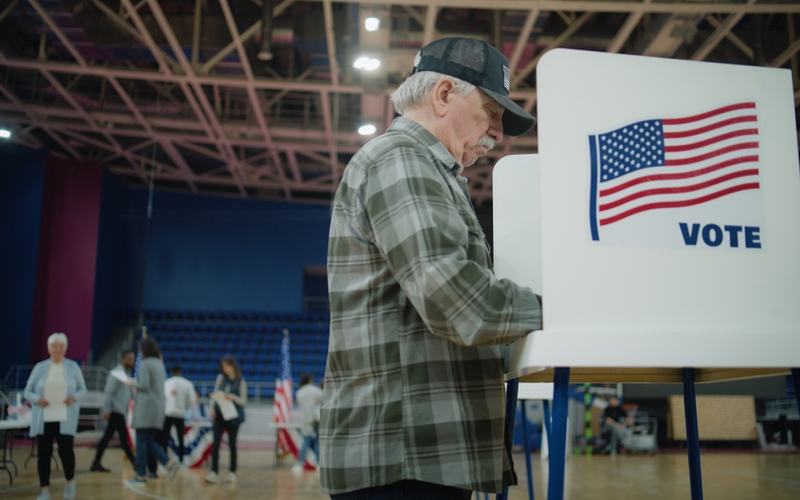
Proponents of a ballot initiative requiring voter identification in California submitted over 1.3 million signatures to county election officials on March 2, clearing a key threshold to qualify for the November 2026 statewide ballot.
The California Voter Identification and Voter List Maintenance Requirements Initiative, backed by Reform California, needs 874,641 valid signatures to qualify as a constitutional amendment. With 1.3 million raw signatures in hand—gathered by more than 18,000 volunteers over five months—organizers expressed confidence in certification after county-by-county verification. The process, which includes random sampling by counties and a final deadline of June 25, typically confirms measures with such a buffer.
If approved by voters, the measure would amend the state constitution to mandate government-issued photo identification for in-person voting or the last four digits of such an ID number for mail ballots. The state would provide free voter ID cards upon request. Election officials would also be required to verify voter registrations for citizenship using government databases, maintain accurate voter rolls, and issue annual reports on verification rates.
Reform California Chairman Carl DeMaio, a former San Diego mayoral candidate and state assemblyman, hailed the effort as a step toward election integrity. "Polling overwhelmingly shows a supermajority consensus for voter ID requirements," DeMaio said, noting that 36 other states already impose such rules. Supporters, including Republican lawmakers like Assemblymembers Bill Essayli and state Sen. Tony Strickland, argue the change would restore public trust in elections amid concerns over non-citizen voting and inaccurate rolls.
Opposition quickly mobilized. The League of Women Voters of California and other civil rights groups launched a campaign Thursday to defeat the initiative, calling it a barrier to voting that disproportionately affects minorities, seniors, and low-income residents. "California must protect access to the ballot box, not block it off," said the coalition. Critics contend current safeguards, like signature matching and registration checks, suffice, and added ID rules echo tactics to suppress turnout.
The initiative was filed in July 2025 and cleared for circulation in September. By October, it had reached 25% of the required signatures. The campaign raised over $3.6 million by late 2025, with recent filings showing nearly $10 million from groups like Californians for Voter ID.
As of Friday, the California Secretary of State's office listed no citizen-initiated measures as qualified for the 2026 ballot, only legislative referrals like changes to voting thresholds and recall rules. Verification will determine if the Shuttvoter ID joins them. Proponents aim for a simple majority vote in November, when midterm elections coincide with several competitive congressional races in the state.

Comments
No comments yet. Be the first to share your thoughts.