
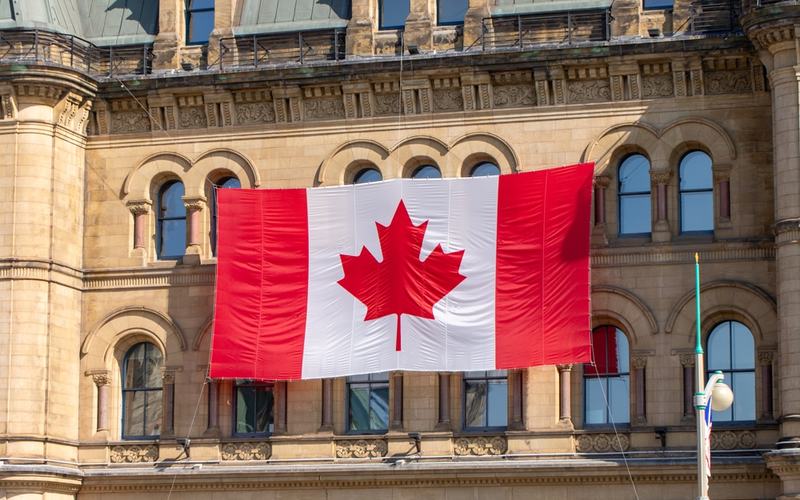
Canada's government has acknowledged that a post-pandemic surge in immigration overwhelmed the country's capacity to provide housing, healthcare, and other services, prompting significant cuts to intake levels.
A new report from the Parliamentary Budget Officer released this week projects that Canada's population growth will remain flat in 2026, largely due to declines in non-permanent residents following federal reductions. The share of non-permanent residents peaked at 7.6 percent of the population in 2024 before dropping toward the government's target of under 5 percent by the end of 2027.
In October 2024, Immigration Minister Marc Miller announced the 2025-2027 Immigration Levels Plan, which explicitly aimed to "alleviate pressures on housing, infrastructure, and social services." The plan lowered permanent resident targets from 500,000 to 395,000 in 2025, 380,000 in 2026, and 365,000 in 2027. It also set controls on temporary residents, including international students and foreign workers, projecting declines of over 445,000 in each of 2025 and 2026.
Miller stated, "While it’s clear our economy needs newcomers, we see the pressures facing our country, and we must adapt our policies accordingly." The measures responded to a rapid influx after pandemic reopenings, when businesses needed workers, but supply outpaced infrastructure growth.
The government's 2025 Annual Report to Parliament reinforced this, noting that "the pace of arrivals began to exceed Canada’s capacity to absorb and support newcomers" and put "pressure on housing supply, the healthcare system, and schools." In 2024, Canada admitted 483,640 permanent residents, with temporary residents reaching 3 million permit holders. Population growth hit 1.8 percent that year, driven 97.3 percent by international migration.
Projections indicate the cuts will reduce the housing supply gap by approximately 670,000 units by the end of 2027 while supporting GDP growth and lowering unemployment. Recent data shows rents trending downward, though experts attribute some improvements to other factors like higher interest rates.
Current Immigration Minister Lena Metlege Diab echoed these concerns earlier this month, admitting that pandemic-era policies led to overpopulation and system-wide strain. The 2026-2028 plan maintains permanent resident targets at 380,000 annually, prioritizing economic immigrants in health care and trades, and further reducing new temporary arrivals to 385,000 in 2026.
These adjustments prioritize transitioning established temporary residents to permanent status. Over 40 percent of 2025 admissions will be to minimize added demands on services. Francophone immigration outside Quebec will rise to 9.5 percent of totals in 2026.
As Canada navigates these changes, the focus shifts to sustainable growth amid ongoing debates over labor needs and public service capacity.

Comments
No comments yet. Be the first to share your thoughts.