
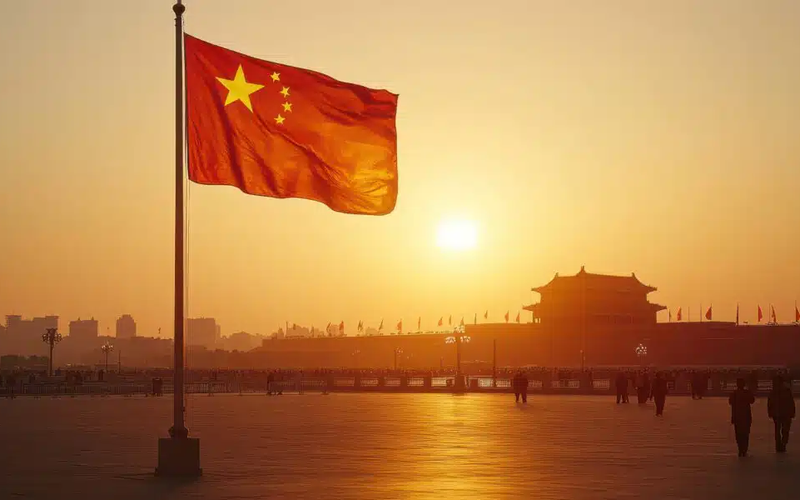
China warned the United States, the Philippines, and Japan on Monday that their joint military drills risk eroding mutual trust and deepening divisions in the Asia-Pacific region.
The annual Balikatan exercises, known as "shoulder-to-shoulder" in Tagalog, kicked off today with over 17,000 troops from the three nations and allies,s including Australia, Canada, and France. Nearly 10,000 U.S. personnel joined thousands of Filipino forces and Japan's largest-ever contingent of 1,400 Self-Defense Forces members in the drills, which run through May 8.
Activities include live-fire maneuvers, mock battles, and sinking exercises off the northwestern Philippine province of Ilocos Norte, near the disputed South China Sea and about 360 kilometers from Taiwan's southern tip. Japanese forces will fire Type 88 missiles at a decommissioned ship 40 nautical miles away, while U.S. Marines deploy explosive-laden drones.
At a regular briefing in Beijing, Foreign Ministry spokesperson Guo Jiakun stated that military cooperation should not undermine understanding among regional countries. "What the Asia-Pacific region most needs is peace and tranquility, and what it least needs is the introduction of external forces to create division and confrontation," he said. Guo added that tying together on security would "only lead to setting themselves on fire and backfiring."
The exercises underscore Washington's defense commitment to Manila, its oldest treaty ally in Asia. U.S. Marine Lt. Gen. Christian Wortman said at the opening ceremony in Quezon City's Camp Aguinaldo: "Regardless of the challenges elsewhere in the world, the United States focus on the Indo-Pacific and our ironclad commitment to the Philippines remains unwavering."
Philippine Armed Forces Chief Gen. Romeo Brawner emphasized upholding international law and a free Indo-Pacific without coercion. Col. Dennis Hernandez of the Philippine Marines described the drills as defensive, noting every country has the right to defend its territory.
Japan's participation marks its first full-scale involvement, facilitated by a 2024 Reciprocal Access Agreement with Manila. The deployment tests Tokyo's commitment to South China Sea security amid disputes between the Philippines and China, as well as Taiwan Strait tensions.
The drills occur against ongoing territorial frictions in the South China Sea, where Beijing claims most of the waters and has clashed with Philippine vessels. The U.S. has repeatedly affirmed its obligation to defend the Philippines if attacked there. Last year, U.S. Defense Secretary Pete Hegseth pledged ramped-up deterrence against China's aggression during a Manila visit.
Analysts view the expanded exercises as institutionalizing trilateral cooperation, though unlikely to drastically escalate tensions in an already fraught region.

Comments
No comments yet. Be the first to share your thoughts.