
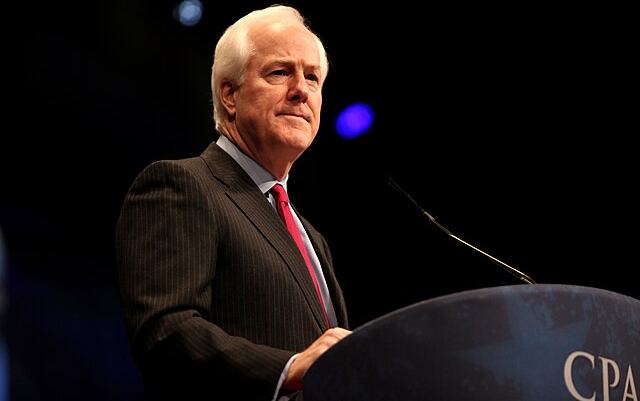
Texas' Republican U.S. Senate primary headed to a May 26 runoff after incumbent Sen. John Cornyn and Attorney General Ken Paxton failed to capture more than 50% of the vote on Tuesday.
With most votes counted late Tuesday, Cornyn held a narrow lead with approximately 42.8% of the vote, followed closely by Paxton at 40.6% and U.S. Rep. Wesley Hunt at 12.9%. Texas law requires a runoff between the top two finishers if no candidate reaches a majority. CNN projected Cornyn and Paxton as the runoff participants, while The New York Times reported Cornyn at 42.7%, Paxton at 40.7% and Hunt at 12.9%.
The race became the most expensive Senate primary in U.S. history, with ad spending surpassing $110 million and totaling nearly $130 million across both parties. Cornyn, seeking a fifth term after winning re-election in 2020, faced challenges from Paxton, a Trump ally who has criticized the senator's conservative credentials, and Hunt, a rising GOP star.
Cornyn benefited from support by business groups, law enforcement and major newspapers, while Paxton drew backing from gun rights advocates and Turning Point Action. President Trump did not endorse ahead of the primary. The contest highlighted tensions between establishment Republicans and the party's MAGA wing.
In the Democratic primary, state Rep. James Talarico led U.S. Rep. Jasmine Crockett with around 52% to 47%, positioning him as the likely nominee, though final certification awaits amid disputes over Dallas County voting procedures. Crockett alleged disenfranchisement due to new rules separating party primaries, but courts largely rejected extensions.
The November general election pits the GOP runoff winner against the Democratic nominee for Cornyn's seat, which Republicans have held since 1993. No Democrat has won statewide in Texas since 1994.
Other notable Republican primaries also triggered runoffs, including attorney general between Mayes Middleton and Chip Roy, and railroad commissioner between Bo French and incumbent Jim Wright. Results in some state Senate districts remained pending, but none were highlighted as immediate runoffs.
Voters turned out amid high stakes for the 2026 midterms, with the Senate race drawing national attention as a test of GOP unity.

.jpg)
Comments
No comments yet. Be the first to share your thoughts.