
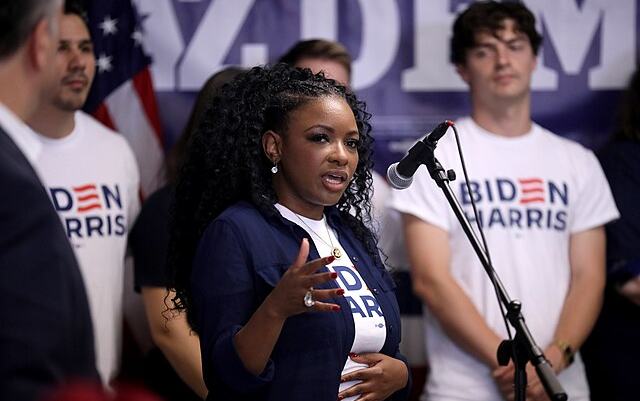
Unusually low turnout in parts of Texas has prompted sharp complaints from the campaign of Rep. Jasmine Crockett, though the concerns center on voting procedures that have long been standard in the state.
Crockett’s campaign has suggested that low participation in Dallas County may stem from voters being turned away after showing up at incorrect precincts. The campaign has pointed to confusion following the decision by some counties not to use countywide voting centers for joint primaries this cycle, a structure Democrats say is easier for voters.
According to the Texas Democratic Party, nearly one-third of voters in Dallas County and Williamson County were turned away for appearing at the wrong polling place. Crockett’s campaign has argued that the situation is “suspiciously low” and has urged supporters to spread information about correct precinct locations.
However, election officials note that precinct-based voting has long been the default model in Texas and remains fully lawful. Counties that opted not to participate in unified joint primaries reverted to traditional precinct voting structures, which require voters to cast ballots at assigned locations rather than at any countywide center.
Critics argue that attributing low turnout to voter suppression lacks substantiated evidence. While confusion can occur when counties shift administrative formats, no verified reports have emerged indicating systemic denial of lawful ballots. Election officials emphasize that voters are provided with public tools, including online precinct locators and sample ballot resources, to confirm voting sites ahead of Election Day.
Low turnout in primary elections is not uncommon in Texas, particularly in non-presidential cycles. Analysts caution against drawing sweeping conclusions before finalized participation data and verified incident reports are available.
The dispute underscores the broader partisan debate over election administration in the state. Democrats frame the return to precinct-based voting as unnecessarily restrictive, while Republicans argue it reflects longstanding procedures and ensures orderly ballot administration.
As final turnout figures are released, they will provide a clearer context on whether polling location confusion significantly affected participation, or whether the numbers reflect typical primary engagement patterns across Texas.

.jpg)
Comments
No comments yet. Be the first to share your thoughts.