
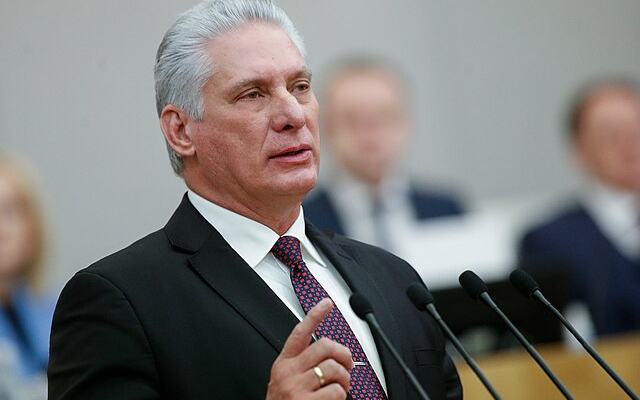
Cuban President Miguel Díaz-Canel confirmed Friday that his government has held talks with the Trump administration to address bilateral differences, marking the first official acknowledgment from Havana.
Díaz-Canel made the announcement during a 90-minute televised news conference in Havana, where he described the discussions as being in their initial phases and aimed at identifying problems requiring solutions through dialogue. "There are international factors that have facilitated these talks," he said, without specifying details, though Vatican involvement has been noted in recent meetings.
The talks, which U.S. media had previously reported, emphasize "respect for the political systems of both countries, sovereignty and our government’s self-determination," Díaz-Canel stated, signaling that Cuba views democratic reforms as off the table. He cautioned that negotiations are "a very sensitive process" and could take time, as agendas are built and agreements reached.
Cuba faces an acute energy crisis exacerbated by U.S. policies. No fuel has entered the country for three months due to an effective oil blockade enforced by the Trump administration, following the capture of Venezuelan President Nicolás Maduro earlier this year. Prolonged blackouts have halted surgeries, strained healthcare, and caused widespread anguish, with Díaz-Canel attributing the situation directly to the "energy blockade."
President Donald Trump has intensified pressure on the communist-led island, declaring in January a national emergency over Cuba's ties to hostile powers. He tasked Secretary of State Marco Rubio with leading negotiations and has predicted the regime's imminent collapse, stating last week that Cuba "is gonna fall pretty soon" and floats ideas of a "friendly takeover." A White House official confirmed the talks, saying leaders should make a deal, which Trump believes "would be very easily made."
Trump reposted news of Díaz-Canel's announcement on Truth Social, underscoring U.S. engagement. The discussions reportedly involve senior Cuban figures, including former President Raúl Castro and Communist Party members.
While the talks offer a potential thaw after decades of hostility, Díaz-Canel stressed Cuba's preparations for the crisis and rejected U.S. narratives around recent incidents, such as a speedboat interception described by Havana as a terrorist plot. No specific outcomes or timelines have emerged from the early-stage exchanges.

Comments
No comments yet. Be the first to share your thoughts.