
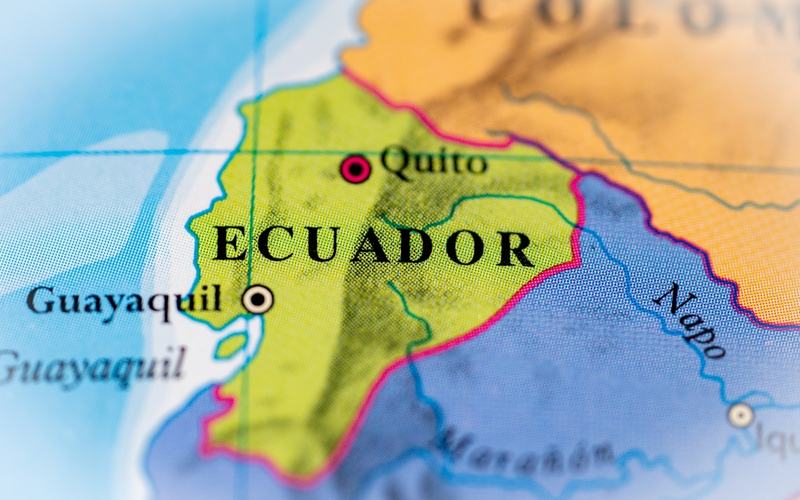
Ecuador's government has mobilized over 75,000 soldiers and police officers to four coastal provinces in a major escalation against drug-related gangs. The operation targets El Oro, Guayas, Los Ríos, and Santo Domingo de los Tsáchilas, areas plagued by high levels of violence.
Interior Minister John Reimberg announced the deployment and declared, "We're at war." He urged residents in the affected provinces to stay indoors, saying, "Don't take any risks. Stay home." Night-time curfews from 11 p.m. to 5 a.m. have been imposed in these provinces, with checkpoints enforced by police. Only essential travelers, emergency services, and health workers are permitted to move during curfew hours, and violations carry penalties of up to three years in prison.
The two-week operation, running until March 31, involves armored vehicles, motorcycles, and helicopters in what officials described as a "very strong offensive." It marks a new phase in President Daniel Noboa's ongoing campaign against criminal organizations, which he has pursued since taking office in November 2023 following his re-election for a full term in 2025.
Ecuador has become a primary transit hub for cocaine from Colombia and Peru, with about 70% of the drug produced in those countries shipped through its ports. The country recorded a record homicide rate in 2025, rising over 30% from 2024 to around 52 per 100,000 inhabitants, fueled by gang battles over drug routes, extortion, and murders.
Noboa attended a recent summit at President Donald Trump's Mar-a-Lago, where Trump likened cartels to a "cancer" and called for military action against them. Noboa posted on social media afterward, stating, "For too long, the mafia thought that America was their territory. That they could cross borders, move drugs and guns, and spread violence without consequences. Their time has run out."
The effort aligns with a U.S.-led "Shield of the Americas" alliance involving 17 countries to combat cartels. The FBI opened its first office in Ecuador last week to tackle drug trafficking, money laundering, and arms smuggling alongside local forces. U.S. support includes logistical aid, such as in a recent bombing of a gang camp.
Noboa's administration has repeatedly declared states of emergency and deployed troops to prisons and ports since declaring an internal armed conflict with gangs in 2024. Ecuador's armed forces number around 40,000, supplemented by the national police to reach the deployment total.

Comments
No comments yet. Be the first to share your thoughts.