
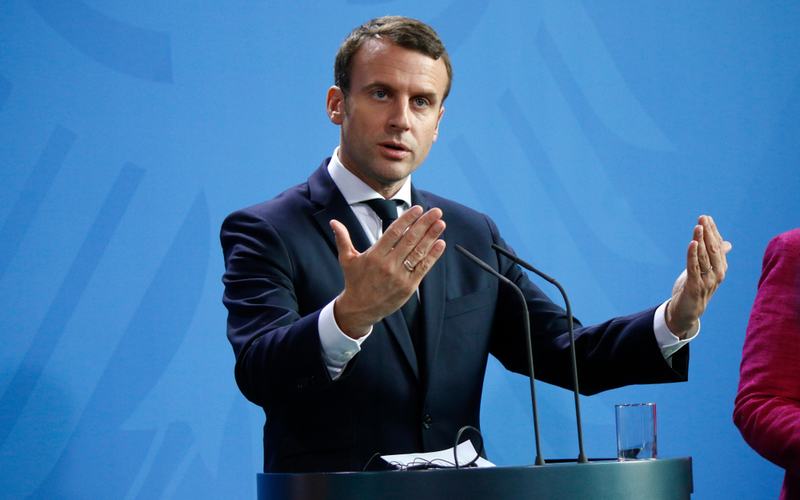
French President Emmanuel Macron declared that 'to be free, we have to be feared' during a keynote speech on nuclear deterrence delivered from the Île Longue submarine base in Brittany. Speaking before military personnel and amid heightened European security concerns, he announced an increase in France's nuclear warheads for the first time in over three decades.
France currently maintains around 290 nuclear warheads, primarily submarine-launched, making it the European Union's sole nuclear power and the world's fourth-largest arsenal after Russia, the United States, and China. Macron ordered an expansion beyond the longstanding policy of 'strict sufficiency,' which had capped the arsenal since the 1990s, without specifying numbers to maintain strategic opacity. The move comes at an annual cost of about 5.6 billion euros for maintaining the forces.
Central to the address was the introduction of 'forward deterrence,' or dissuasion avancée, aimed at deepening ties with European partners while preserving France's sole authority over nuclear decisions. Under this strategy, allies including Germany, Poland, the Netherlands, Belgium, Greece, Sweden, Denmark, and Britain could join French nuclear exercises with their conventional forces, conduct joint site visits, and potentially host temporary deployments of French nuclear-capable aircraft like Rafale jets. A new France-Germany nuclear steering group will facilitate dialogue on these matters, starting this year.
Macron framed the updates as complementary to NATO's nuclear mission and conducted in coordination with Washington, emphasizing that France's doctrine remains strictly defensive and protects vital interests with a European dimension. "What I'd like is for Europeans to regain control of their own destiny," he stated.
The speech responds to evolving threats, including Russia's nuclear posturing in Ukraine and doubts over sustained U.S. commitment under President Donald Trump. It builds on prior Franco-British agreements and Macron's calls at the Munich Security Conference for Europe to bolster its geopolitical power. France has kept at least one nuclear-armed submarine at sea continuously since 1972, with four such vessels based at Île Longue.
Reactions were positive from key partners. German Chancellor Friedrich Merz endorsed the steering group in a joint statement, while Polish Prime Minister Donald Tusk noted ongoing talks with France and allies on advanced deterrence, stating, "We are arming up together with our friends so that our enemies will never dare to attack us." Macron added that partners appeared ready to proceed.
The announcements mark a doctrinal evolution not seen since 1992, positioning France to offer a 'backstop' reassurance to Europe without supplanting NATO structures. France also plans a Paris summit on March 10 to promote nuclear energy development.

Comments
No comments yet. Be the first to share your thoughts.