
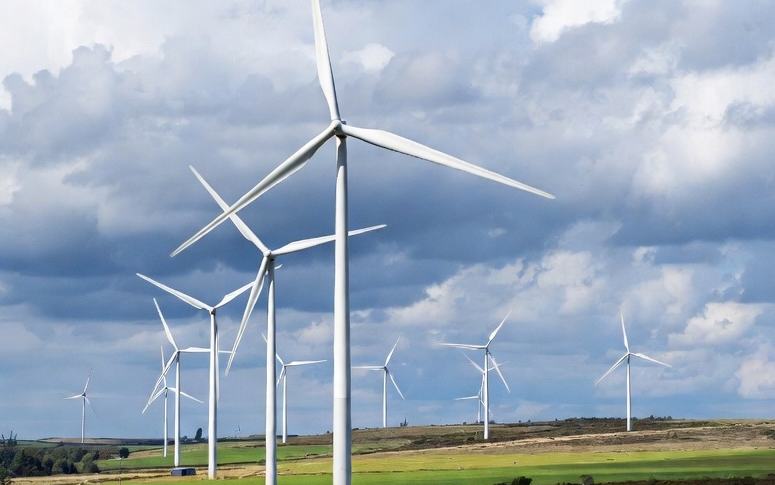
Energy Secretary Chris Wright delivered a dose of overdue candor this week before the International Energy Agency in Paris. Speaking directly to an organization that has spent years chasing politically driven climate goals instead of measurable energy outcomes, Wright laid it out plainly: net-zero emissions by 2050 has a 0.0% chance of happening. Zero point zero. And the attempt to force it anyway has already cost the world more than $10 trillion while delivering just 2.6% of global energy from wind, solar, batteries, and the sprawling transmission networks they require.
That is not a rounding error. That is a staggering misallocation of resources—money that could have gone to genuine energy access, infrastructure, or even the domestic priorities that shape whether families feel the future is worth investing in. Bjorn Lomborg’s realistic perspective captures the heart of the problem: even accepting the mainstream climate projections, the trade-offs of aggressive net-zero timelines simply are not worth it. The enormous costs far outweigh any modest climate benefits, crowding out far more effective investments in health, education, poverty reduction, and genuine technological breakthroughs.
Even for someone like me, whose professional life has centered on education and opportunity rather than energy or climate modeling, the pattern has become impossible to ignore. “Climate science” hasn’t been disproven so much as it has been stretched, politicized, and weaponized into an all-consuming policy lodestar. Institutions like the IEA, originally created to safeguard energy security in the wake of the 1973 oil crisis, drifted into producing report after report anchored in wishful ambition rather than “humans and math,” as Wright put it. Every forecast carried a mandatory net-zero pathway. None reflected what was actually occurring on the ground, and none factored in the true associated costs.
The domestic mirror is unmistakable. In U.S. states that embraced aggressive renewable portfolio standards, average electricity prices run roughly 50% higher than in states that did not, according to Wright. Industries face higher costs or they simply relocate. Households feel it in monthly bills that eat deeper into budgets already strained by inflation and stagnant wage growth in real terms. Globally, the same pursuit has slowed progress on basic energy access—two million people still die annually from a lack of clean cooking fuel—while Europe’s self-imposed energy constraints accelerate deindustrialization.
This is the domestic price tag of an international order that lost its way: not dramatic catastrophe, but grinding erosion of affordability, reliability, and hope. Parents trying to heat homes, manufacturers weighing relocation, and developing nations told to forgo the very energy sources that lifted billions out of poverty—these are not abstract victims of “climate denial.” They are concrete casualties of extreme climate overreach.
I am no energy expert. My skepticism doesn’t stem from sophisticated climate models or deep dives into atmospheric physics. It comes from watching the same institutions that once delivered post-war stability now treat energy policy like a moral crusade, indifferent to the human and economic fallout. When trillions yield marginal gains and visible pain, ordinary citizens are right to ask whether the system still works for them.
Secretary Wright’s message—refocus the IEA on energy data, security, and bettering lives; drop the mandatory net-zero dogma; let politics stay at the government level—wasn’t ideological chest-thumping. It was a call to return institutions to their proper lane. The United States, under this administration, is driving growth in every affordable, reliable source we can develop. That approach doesn’t deny environmental stewardship; it grounds it in reality, innovation, and measurable progress rather than unattainable targets that punish the present to appease an imaginary future.
Reversing the damage won’t require new apocalyptic warnings or larger subsidies. It requires the same clear-eyed realism Wright brought to Paris: measure what matters, prioritize what works, and remember that energy exists to serve people, not the other way around.
When global bodies and domestic policy alike recommit to that principle, the quiet erosion of confidence that Gallup continues to track has a chance to reverse. Not through rhetoric, but through results Americans can feel at the kitchen table—lower bills, stronger industries, and a future that once again feels worth building toward.
Matthew Nielsen is the author of Critical Condition: Destructive Ideologies in America’s Classrooms.
Comments
No comments yet. Be the first to share your thoughts.