
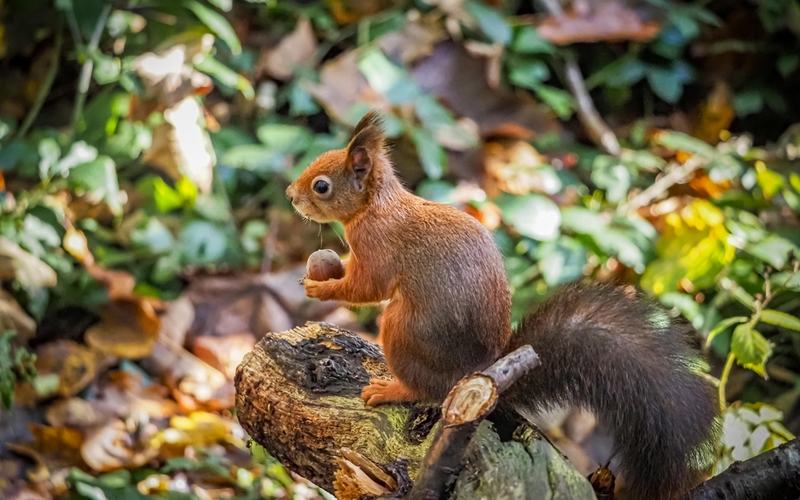
England's native red squirrels risk disappearing from the mainland within 25 years if current trends continue, according to a new government-backed recovery strategy. The report, published by Natural England on April 14, 2026, highlights the severe decline driven primarily by invasive grey squirrels introduced from North America in the late 1870s.
Once numbering around 3.5 million across the United Kingdom, red squirrel populations have plummeted to between 120,000 and 287,000, with estimates varying by source. In England specifically, fewer than 39,000 remain, confined to fragmented strongholds in the north, such as Cumbria and Northumberland, the Isle of Wight, and areas around Poole Harbour, a 95% contraction of their historical range. Grey squirrels, now numbering about 2.7 million in the UK, outcompete reds for food resources like acorns and hazel nuts, stripping bark from trees and spreading squirrelpox virus, which is often fatal to reds but rarely affects greys.
Habitat loss and fragmentation from woodland clearance exacerbate the issue, isolating small populations vulnerable to genetic bottlenecks and local extinctions. The recovery strategy, led by the Zoological Society of London, modeled 18 potential interventions, concluding that large-scale grey squirrel suppression combined with red squirrel translocations offers the best chance for recovery, though it would require significant funding and coordination.
Public pressure has mounted, with a petition from Save Our Reds surpassing 77,000 signatures, demanding a national plan for humane grey management, squirrelpox vaccine development, fertility control research, and stricter habitat protections. Marie Carter-Robb of the group described the situation as a 'shocking decline,' urging government, conservationists, and landowners to unite before reds vanish entirely from England.
The government has responded with commitments to grey control and fertility research. Defra supports studies into contraceptives for greys, while Forestry England conducts monitoring, trapping, and habitat management in partnership with volunteers. Regional projects, such as those in Cumbria and Northumberland, have shown promise, with 52% of monitored sites detecting red activity in 2024. Efforts also include pine marten reintroductions, which naturally suppress greys, as trialed in Dartmoor woods last year.
The strategy emphasizes that while challenging, recovery remains feasible through targeted regional actions where national-scale culling proves impractical due to costs exceeding £37 million annually in ecological and economic damages from greys alone. Without escalated efforts, model projections confirm extinction on England's mainland by mid-century.

Comments
No comments yet. Be the first to share your thoughts.