
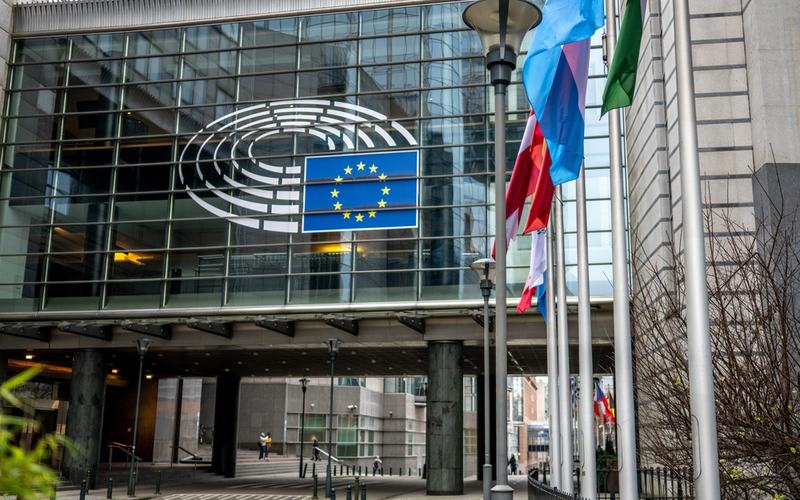
The European Parliament suspended work on ratifying a trade deal with the United States on Monday, citing uncertainty from President Donald Trump's announcement of fresh tariffs.
The decision by the Parliament's international trade committee, chaired by Bernd Lange, came days after the U.S. Supreme Court struck down Trump's previous "reciprocal" tariffs imposed under emergency powers. Trump quickly responded over the weekend by imposing a 10% global tariff under Section 122 of the Trade Act of 1974, later raising it to 15%, with the initial levy taking effect Tuesday.
The US-EU trade agreement, struck last summer between Trump and European Commission President Ursula von der Leyen at Turnberry, Scotland, set a 15% U.S. tariff ceiling on most EU goods, excluding steel and aluminum at 50%, and certain derivatives. In return, the EU agreed to eliminate tariffs on U.S. industrial goods, including zero duties on lobsters and aircraft parts. EU officials argue that the new tariffs, which stack on top of existing duties, push rates above the agreed cap for products like Parmesan and Camembert cheeses, potentially reaching 30%.
"A deal is a deal," Lange told CNBC, emphasizing multiple U.S. breaches since the pact, including lifting 400 derivative products to 50% tariffs and prior threats over Greenland. He called for three years of stability without new irritants before resuming ratification. The committee had planned a vote on Tuesday but postponed it, with main groups including the center-right EPP, Socialists & Democrats, and Renew backing the freeze.
This marks the second pause; lawmakers halted progress in January after Trump's threats to tariff European nations backing Denmark's claim on Greenland, resuming only after his reversal. The deal includes an 18-month sunset clause requiring further negotiations.
U.S. Trade Representative Jamieson Greer stated the administration's policy remains unchanged and expects to honor such agreements, amid active talks with the EU. Trump warned on Truth Social that nations "playing games" with the court ruling face higher duties.
The European Commission contacted U.S. officials, insisting EU products deserve the agreed competitive treatment. Lange noted the bloc's Anti-Coercion Instrument remains available for retaliation, potentially limiting U.S. access to EU markets, tenders, and investments, but said the case is not yet met.
European stocks dipped, with the Stoxx Europe 600 falling 0.4%, reflecting tariff jitters. Lawmakers plan to reconvene March 4 for reassessment, pending U.S. clarifications. The temporary tariffs expire in 150 days, adding further unpredictability.

Comments
No comments yet. Be the first to share your thoughts.