
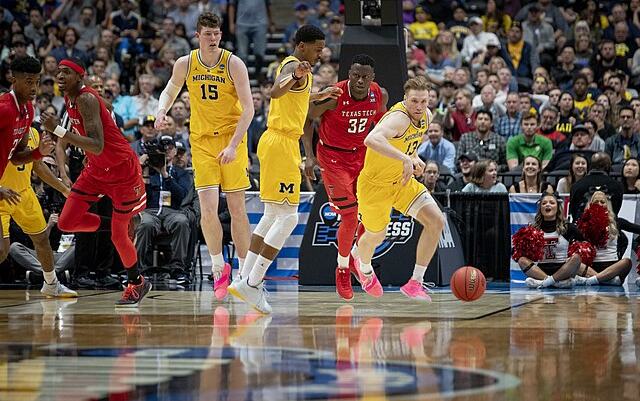
The 2026 NCAA men’s basketball Final Four is set, with UConn, Illinois, Arizona, and Michigan advancing to Indianapolis after a weekend that showcased both powerhouse programs and shifting dynamics in the sport. UConn secured its place with a stunning comeback win over Duke, rallying from a 19-point deficit and sealing the victory on a deep, last-second shot by Braylon Mullins with 0.4 seconds remaining.
The Huskies’ latest run marks their third Final Four appearance in the past four years. Under head coach Dan Hurley, the program has developed a reputation for postseason success, having converted its previous two Final Four trips into national championships.
Illinois enters the national semifinals for the first time since 2005, when the program finished as runner-up. Despite consistent success in Big Ten play over the past several seasons, the Illini arrive as the lowest-seeded team remaining, giving them an unusual role as an underdog among largely established contenders. Head coach Brad Underwood, whose teams have been among the conference’s most successful in recent years, described the achievement as the result of sustained program building rather than a one-time breakthrough.
Arizona and Michigan round out the field as No. 1 seeds, each bringing rosters loaded with NBA-level talent. Arizona, led by standout guard Brayden Burries, and Michigan, anchored by forward Yaxel Lendeborg, have combined for multiple projected professional prospects and enter the semifinals as top championship contenders. Michigan advanced dominantly with a decisive win over Tennessee.
The semifinal matchups will feature Illinois facing UConn, while Arizona takes on Michigan in a meeting of top seeds. Betting markets initially listed Arizona as a slight favorite to win the national title, though Michigan opened as a narrow favorite in their head-to-head matchup.
This year’s Final Four reflects broader changes in college basketball, as the transfer portal and name, image, and likeness (NIL) policies continue to reshape roster construction. Traditional power programs have increasingly consolidated talent, while deep tournament runs by mid-major schools have become less common compared to previous seasons.
Both Illinois and Michigan will also carry the hopes of the Big Ten, which has not won a national championship since Michigan State claimed the title in 2000. With a mix of experienced programs and evolving roster strategies, the Final Four sets up a high-profile conclusion to this year’s tournament.

Comments
No comments yet. Be the first to share your thoughts.