
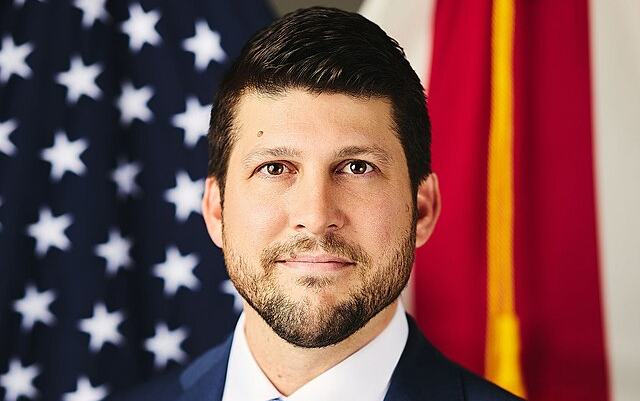
Florida Attorney General James Uthmeier is warning a private Catholic law school in the Miami area that it may be violating state law after denying students the ability to form a chapter of Turning Point USA.
In a letter sent to Barry University School of Law Dean Leticia Diaz and publicly posted, Uthmeier argued the school’s decision could run afoul of Florida’s consumer protection laws by contradicting commitments outlined in its own student handbook.
Because Barry University is a private institution, it is not directly bound by the First Amendment. However, Uthmeier contends the school has created a contractual obligation with students by promising rights to free expression and association, including the ability to organize student groups affiliated with outside organizations.
“Denying students the ability to form a TPUSA chapter at Barry Law likely violates students’ contractually ‘guaranteed’ freedom of expression and association,” Uthmeier wrote, adding that the decision discourages open discussion and limits students’ ability to organize around shared viewpoints.
According to the letter, the law school justified its decision by claiming Turning Point USA’s style of political advocacy conflicts with the university’s educational mission. Uthmeier disputed that reasoning, arguing the policy selectively targets conservative viewpoints while allowing other ideologically driven organizations to operate on campus.
He also pointed to language in the school’s policies stating that student groups will not be denied recognition solely based on affiliation with outside organizations, asserting that the rejection of the TPUSA chapter appears to violate that standard.
Uthmeier called on the university to reverse its decision, warning that failure to do so could carry broader consequences. He raised concerns about whether students are being exposed to a diversity of viewpoints and suggested the issue could impact how employers view graduates of the law school.
While the attorney general did not explicitly threaten legal action, he cited state consumer protection statutes and set a May 15 deadline for the school to respond.
A spokesperson for Barry University confirmed the school has received the letter and is reviewing the concerns raised.

Comments
No comments yet. Be the first to share your thoughts.