
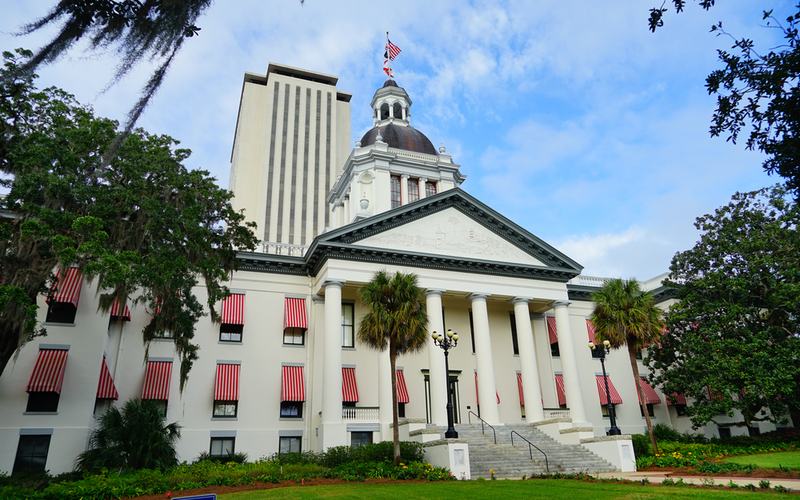
The Florida Senate approved a new congressional map proposed by Gov. Ron DeSantis on Wednesday, voting 21-17 to advance the plan that could deliver Republicans up to four additional U.S. House seats ahead of the 2026 midterm elections.
The Republican-controlled House had earlier passed the measure known as HB 1D by an 83-28 margin, sending it to DeSantis for his expected signature. The swift action came during a special legislative session that began Monday, just two days after DeSantis submitted the map on April 27.
DeSantis' office justified the mid-decade redistricting by citing significant population growth of nearly 2 million residents, or 8.9%, since the 2020 census, particularly in areas around Tampa, Orlando, and north of Palm Beach County. The proposal also addresses a 760,000-person undercount in the census that cost Florida at least one congressional seat. The map achieves perfect population equality across Florida's 28 districts, with each holding 769,221 residents except one, at 769,220.
The plan redraws districts in Democratic strongholds, targeting seats held by Reps. Darren Soto (District 9, Orlando area), Kathy Castor (District 14, Tampa), Lois Frankel (District 22), and Debbie Wasserman Schultz (District 25, Miami area). Based on 2024 presidential election results, these districts shift from Democratic-leaning to Republican-favoring, with leans changing from D+3.5 to R+17.7 in District 9, D+7.6 to R+10.5 in District 14, D+5.6 to R+10.5 in District 22, and D+5.3 to R+9.1 in District 25. Florida's current delegation stands at 20 Republicans and 8 Democrats; the new map could expand that to 24-4.
Proponents emphasized the map's race-neutral design, rejecting race-based requirements under Florida's Fair Districts Amendments as unconstitutional following U.S. Supreme Court precedents. Map drawer Jason Poreda described it as compact, following county lines where possible, and free of racial considerations. The approval coincided with a Supreme Court ruling in Louisiana v. Callais that limited Voting Rights Act challenges to majority-minority districts.
Democrats decried the process as a partisan power grab. House Minority Leader Fentrice Driskell accused Republicans of destroying democracy, while Rep. Michele Rayner called it an injection of national politics into a state matter. Critics noted the rushed timeline, with limited public input and deference to the governor's office. The state constitution bans partisan gerrymandering, setting the stage for likely lawsuits from voting rights groups.
Rep. Jenna Persons-Mulicka, the House sponsor, expressed confidence that the map would withstand legal challenges based on committee testimony. Senate President Ben Albritton had circulated the governor's submission to members ahead of the session.
The effort aligns with national Republican strategies to bolster House control amid competitive midterms. Florida, with its growing Republican registration edge, remains a key battleground.

Comments
No comments yet. Be the first to share your thoughts.