
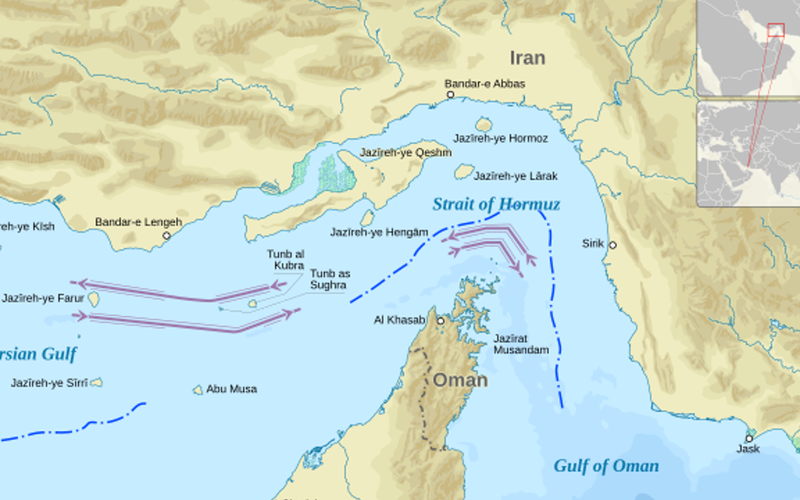
France and Italy have initiated discussions with Iran to negotiate guarantees for the safe passage of their commercial vessels through the Strait of Hormuz, a critical chokepoint for global energy trade, according to a report from the Financial Times. The talks come as Iran maintains an effective blockade of the waterway, which has severely disrupted oil and gas shipments since late February.
The crisis erupted on February 28, 2026, when the United States and Israel launched Operation Epic Fury, a series of airstrikes targeting Iranian military sites, nuclear facilities, and leadership, including Supreme Leader Ali Khamenei, who was killed in the attacks. Iran retaliated with missile and drone strikes on U.S. bases in Gulf states such as the UAE, Qatar, and Bahrain, as well as Israeli territory. Iran's Islamic Revolutionary Guard Corps (IRGC) issued radio warnings to vessels and began targeting ships, leading to a sharp drop in traffic, down 70% initially and approaching zero in subsequent days.
At least 17 merchant vessels have been damaged or attacked, six abandoned, and one tugboat sunk, resulting in at least 10 seafarers killed or missing and additional casualties. Iran has allowed limited transits for Chinese-owned ships and others meeting certain conditions, such as expelling U.S. and Israeli ambassadors, but has declared the strait closed to U.S., Israeli, and allied Western vessels. On March 12, Iran's new Supreme Leader, Mojtaba Khamenei, vowed to maintain the closure as a "tool to pressure the enemy."
The Strait of Hormuz handles about 20% of global seaborne oil trade, roughly 20 million barrels per day, and significant liquefied natural gas (LNG) from Qatar, which supplies 12-14% of Europe's needs. The disruptions have driven Brent crude oil prices above $100 per barrel, peaking at $126 earlier this month, while European natural gas prices surged to €60 per megawatt-hour before easing slightly. In response, the International Energy Agency released 400 million barrels from emergency reserves, and producers like Qatar, Kuwait, the UAE, and Iraq have declared force majeure or cut output.
European nations, heavily reliant on the route for energy and exports, have voiced alarm. Italy faces disruptions to agri-food shipments worth over €2 billion annually, while Ireland worries about fertilizer price spikes affecting agriculture. Hungary renewed fuel price caps to protect consumers. France has announced Operation Aspides, a defensive escort mission involving frigates to protect shipping, with support from Britain, Germany, and Italy. The G7 has agreed to explore joint escorts, potentially starting late this month.
Details of the France-Italy talks remain limited, with no proposed terms or official confirmations disclosed. Reuters noted it could not immediately verify the Financial Times report, which cited sources briefed on the efforts. The discussions represent a European push for diplomatic solutions amid U.S. plans for naval escorts and ongoing military exchanges, including U.S. strikes on Iranian minelayers.
The situation continues to pose risks to global energy markets and economies.

Comments
No comments yet. Be the first to share your thoughts.