
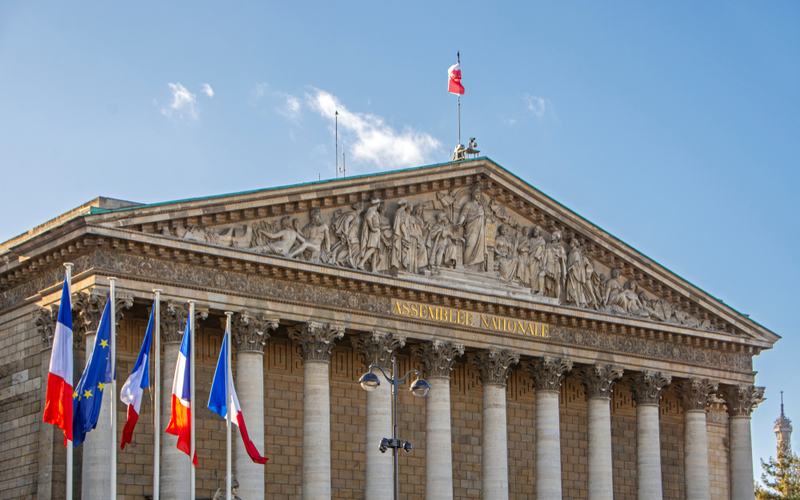
The French government, led by Prime Minister Sebastien Lecornu, survived two no-confidence motions in the National Assembly on Wednesday after bypassing parliament to enact a new multiyear energy strategy.
The first motion, tabled by the far-right National Rally (RN), garnered 140 votes in favor, well short of the 289 required to topple the government. A second motion from the hard-left France Unbowed (LFI) party also failed, though exact tallies were not immediately detailed in reports.
Lecornu's administration, lacking an absolute majority since legislative elections, resorted to a decree to publish the Programming Pluriannuelle de l'Energie (PPE3), a roadmap outlining energy targets through 2035. Unveiled on February 12 after three years of delays, the strategy prioritizes relaunching low-carbon electricity production, particularly nuclear power, to reduce reliance on expensive imported fossil fuels. It also scales back deployment of onshore wind and solar capacity.
Opposition parties decried the move as an affront to parliament. The RN labeled it an 'illiberal act' that accelerates intermittent renewables under European Commission influence, misrepresents nuclear capabilities, and burdens public finances. LFI criticized the forceful passage and the emphasis on nuclear at the expense of renewables, which they see as essential for short-term climate action.
Socialist Party lawmakers, pivotal swing votes, withheld support from both motions to maintain stability and provide clarity for energy investors amid policy uncertainty. French Communists largely abstained from backing LFI over nuclear policy differences.
This marks the latest in a series of parliamentary showdowns for Lecornu's government. Earlier this year, it survived multiple no-confidence votes tied to forcing through the delayed 2026 budget using constitutional article 49.3. The tactic allows legislation to pass without a vote but triggers potential censure motions.
The energy decree aims to deliver long-term visibility to the sector after prolonged debates. Proponents argue it balances decarbonization with energy security, leveraging France's nuclear expertise.
Lecornu, a close Macron ally, has navigated the fragmented assembly through targeted alliances and repeated use of extraordinary measures. The government's endurance underscores the opposition's inability to unite across ideological lines despite widespread discontent with the decree process.
As the dust settles, attention may shift to potential cabinet changes, including the possible exit of Culture Minister Rachida Dati.

Comments
No comments yet. Be the first to share your thoughts.