

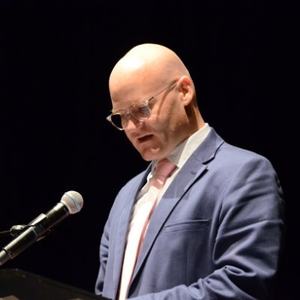
California Governor Gavin Newsom stepped into an awkward spotlight this week during a book-tour stop in Atlanta. Speaking alongside Atlanta Mayor Andre Dickens to a predominantly Black audience, Newsom sought to build rapport with a now-viral line: “I’m not trying to impress you, I’m just trying to impress upon you, ‘I’m like you. I’m not better than you.’ I’m a 960 SAT guy.” He added that he still cannot read a prepared speech, citing his dyslexia.
The intent, no doubt, was relatability. The effect was something else entirely—an unmistakable signal that, in Newsom’s mind, low academic performance is the bridge to “being like” Black Americans. This wasn’t a slip (campaign consultants could have even encouraged him to say it). It was a textbook display of what researchers have documented for years: the subtle, well-meaning but deeply condescending habit among White liberals of lowering their own presentation of competence when addressing people of color.
A 2018 study from Yale’s Cydney Dupree and Princeton’s Susan Fiske, published in the Journal of Personality and Social Psychology, captured the pattern precisely. White liberals—but not conservatives—engage in what the researchers call a “competence downshift.” When speaking or writing to Black audiences, they use fewer words signaling intelligence, skill, or capability and more words signaling warmth and approachability. They simplify vocabulary. They avoid complex structures. They code-switch downward, unconsciously drawing on stereotypes of lower competence in an effort to seem relatable and non-threatening.
Newsom’s performance fits the script almost perfectly. By equating his modest SAT score and reading struggles with the lived experience of the room, he wasn’t elevating anyone. He was assuming a shared ceiling—and broadcasting it publicly.
The episode is hard for anyone that’s paying attention to ignore. This isn’t harmless pandering. It is the logical endpoint of a worldview that treats racial gaps in outcomes as fixed features rather than solvable problems rooted in family structure, culture, and—most critically—expectations. When leaders signal that average or below-average academic performance is simply “how things are” for an entire demographic, they don’t empower; they excuse. They don’t build mobility; they entrench it.
The domestic mirror here is unmistakable. Decades of lowered standards in K-12 education, affirmative-action policies that mismatch students with institutions, and a broader cultural reluctance to demand excellence have produced predictable results: stagnant NAEP scores, widening achievement gaps in many urban districts, and young people—disproportionately Black—who are told the system is rigged rather than challenged to master it. Parents see it. Teachers who still believe in merit see it. And ordinary Americans, regardless of background, feel the erosion of the very institutions meant to deliver upward mobility.
To be clear, dyslexia is real, and personal struggles deserve empathy. But turning them into a racial relatability prop is something different. It reveals the soft bigotry of diminished expectations that has haunted progressive education policy for generations. The Yale study shows this isn’t isolated psychology; it is a reliable behavioral tic among those who loudly champion “equity” while quietly assuming unequal capacity.
Reversing this damage won’t come from more cheap, performative speeches or ever-more-elaborate euphemisms. It requires the same clear-eyed realism we demand in every other failing institution: measure what matters, set high standards without apology, and judge outcomes by results rather than intentions. When schools, leaders, and culture once again treat every child as capable of rigorous achievement—when we stop code-switching competence downward and start insisting on competence upward—the quiet erosion of confidence in American opportunity has a chance to reverse.
Not through lowered bars disguised as compassion, but through honest assessment and courageous reform that actually delivers the better future families deserve.
Matthew Nielsen is Board President at the Educational Freedom Institute and author of Critical Condition: Destructive Ideologies in America’s Classrooms.
Comments
No comments yet. Be the first to share your thoughts.