
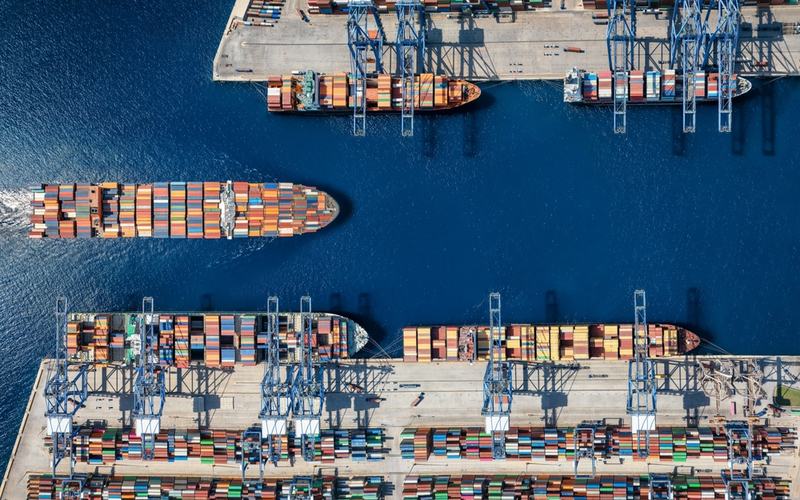
Global trade volumes rose 4.4% in 2025, defying predictions that sweeping U.S. tariffs would stifle cross-border commerce, according to data from the Netherlands Bureau for Economic Policy Analysis (CPB). The gain outpaced 2024’s 2.5% growth and came even after President Donald Trump imposed country-specific tariffs last spring.
The rebound surprised forecasters, as the World Trade Organization had initially projected a contraction. Analysts say supply-chain adjustments, selective tariff reductions, and limited retaliation by U.S. trading partners helped sustain trade. Bank of England Governor Andrew Bailey said the world economy “was more robust than we feared” and cited positive effects from artificial intelligence investment.
China and much of Asia were major beneficiaries. Chinese exports jumped 8.5% in 2025, while advanced Asian economies outside Japan, including Taiwan, saw shipments surge 15.9%. European exports fell slightly but remained resilient.
Economists note that companies rerouted supply chains instead of cutting production. U.S. domestic growth also supported global demand, with GDP expanding 2.2% in 2025. Investment in AI infrastructure further boosted shipments of semiconductors, servers, and related equipment, particularly from Asia.
Looking ahead, trade momentum is expected to slow. The WTO forecasts just 0.5% growth in 2026, reflecting delayed tariff effects and moderating AI investment. A recent Supreme Court decision striking down the administration’s country-specific tariffs led to a temporary 10% across-the-board duty on imports, leaving steel and aluminum tariffs unchanged. Analysts warn short-term surges could temporarily widen the U.S. trade deficit.
Despite policy uncertainty and legal challenges, global trade in 2025 proved more resilient than many expected, driven in part by the AI-driven global infrastructure build-out.

Comments
No comments yet. Be the first to share your thoughts.