
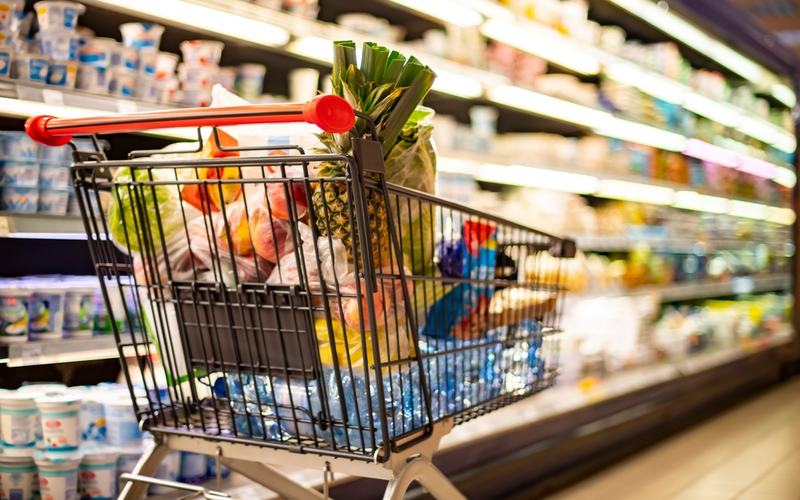
The U.S. Bureau of Labor Statistics reported that prices for food purchased at grocery stores rose 2.4 percent in the year through February 2026, the same rate as the overall Consumer Price Index for All Urban Consumers. Overall food prices, including those for eating out, climbed 3.1 percent during the same period, outpacing the broader 2.4 percent inflation rate.
In February alone, the food-at-home index increased 0.4 percent on a seasonally adjusted basis, matching the rise in the total food index. Categories showing notable annual gains included nonalcoholic beverages at 5.6 percent, other food at home at 3.3 percent, fruits and vegetables at 2.7 percent, and cereals and bakery products at 2.7 percent. The meats, poultry, fish, and eggs group edged up 0.4 percent despite a 42.1 percent drop in egg prices, while dairy products were nearly flat at 0.1 percent.
Wholesale data released last week painted a hotter picture. The Producer Price Index for final demand rose 0.7 percent in February, with a 3.4 percent year-over-year advance, the largest since February 2025. Food prices at the producer level surged 2.4 percent for the month, led by a 48.9 percent jump in fresh and dry vegetables. Chicken eggs also rebounded sharply.
These developments come amid forecasts for continued food price growth this year. The USDA's Economic Research Service predicts food-at-home prices will rise 2.5 percent in 2026, below the 20-year average of 2.6 percent, while overall food prices could increase 3.1 percent. Beef and veal face the steepest projected hike at 5.5 percent, followed by sugar and sweets at 6.7 percent and nonalcoholic beverages at 5.2 percent. Eggs, however, are expected to fall 27.4 percent.
The data has heightened concerns about inflation pressures, particularly after a stronger-than-expected PPI report. Analysts note that recent geopolitical tensions, including the U.S.-Israeli conflict with Iran that began late last month, have driven up energy costs, which could filter into food production and transportation expenses.
Core CPI, excluding food and energy, rose 2.5 percent over the year, indicating broad-based price pressures remain subdued but sticky. Food-away-from-home prices, meanwhile, advanced 3.9 percent annually, with full-service meals up 4.6 percent.
Consumers have seen grocery bills accumulate significant increases since the pandemic. From February 2020 levels, food-at-home prices stand about 25 percent higher, though the pace of increases has moderated from peaks in 2022.
The next CPI report, covering March data, is due in mid-April and will provide further insight into whether wholesale spikes are passing through to retail shelves.

Comments
No comments yet. Be the first to share your thoughts.