
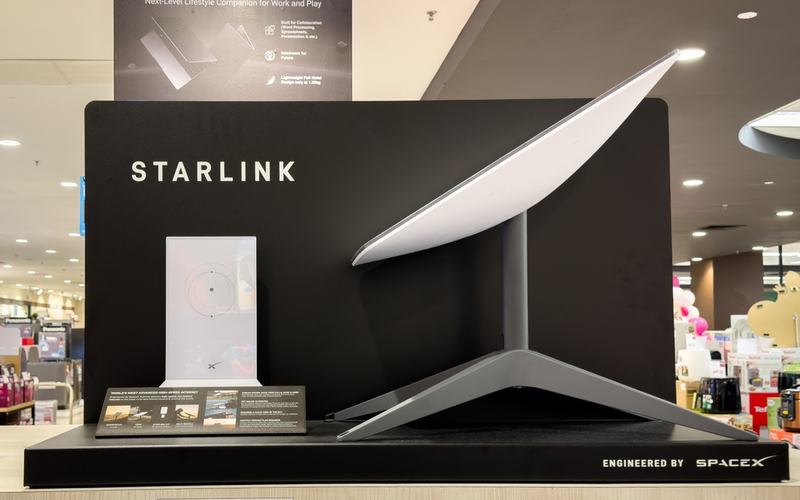
Iranian state media declared SpaceX's Starlink satellite internet service a "legitimate target" late Tuesday, marking a sharp escalation in Tehran's confrontation with U.S. technology amid regional tensions.
Fars News Agency, closely tied to the Islamic Revolutionary Guard Corps (IRGC), released an infographic highlighting Starlink's operational footprint in Bahrain, Kuwait, and the United Arab Emirates. The declaration frames the network as a strategic asset in the ongoing shadow war with the United States and Israel.
Inside Iran, authorities have long banned Starlink, classifying its possession and use as crimes punishable by up to two years in prison. The service has become a vital tool for citizens bypassing government-imposed internet blackouts during widespread protests. Iranian intelligence seized hundreds of Starlink terminals in March amid one such blackout, with additional confiscations reported as recently as last week.
Starlink terminals have proliferated underground, with estimates of up to 50,000 in use by early 2026 to maintain contact with the outside world. The U.S. reportedly facilitated the transport of 6,000 units into Iran since January, further fueling regime suspicions of foreign interference.
Iran has employed jamming technology and raids to disrupt the service, drawing parallels to Russian tactics in Ukraine. Security forces use radio scanners to locate dishes, often during protest crackdowns.
This latest rhetoric aligns with broader IRGC threats issued overnight against over a dozen U.S. tech giants. The IRGC labeled companies, including Meta, Google, Apple, Tesla, Microsoft, and Nvidia, as "legitimate targets" for allegedly enabling AI-driven assassinations of Iranian leaders, including more than 250 officials in recent Israeli strikes. "From now on, these main institutions will be our legitimate targets," the statement warned, urging evacuations near regional offices.
The threats follow intense U.S.-backed operations that Iran blames for decapitating its command structure. Previous IRGC actions targeted Amazon Web Services infrastructure in Bahrain and the UAE.
Neither SpaceX nor Elon Musk has publicly responded as of early Wednesday. Starlink, which activated service over Iran during January blackouts, continues to operate despite jamming efforts. Analysts view the designation as an attempt to deter expansion and justify potential strikes on ground terminals, which could endanger civilian users reliant on the network for uncensored information.

Comments
No comments yet. Be the first to share your thoughts.