
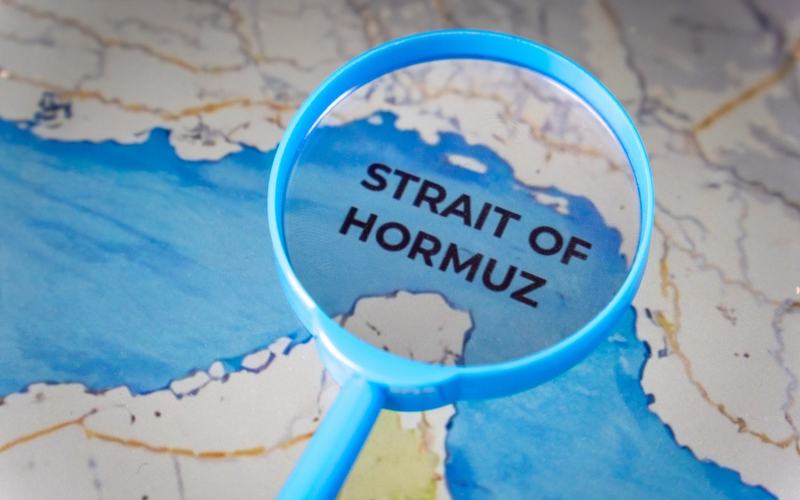
U.S. officials revealed Friday that Iran cannot locate all the sea mines it planted in the Strait of Hormuz, stalling efforts to fully reopen the vital waterway despite a fragile ceasefire.
The disclosure comes as shipping traffic through the strait remains near a standstill, with only 15 vessels entering or exiting since the April 8 ceasefire between the United States and Iran. Iran mined the strait last month using small boats soon after the U.S. and Israel launched strikes against Iranian targets on February 28, disrupting about 20 percent of global oil flows and driving prices higher.
The haphazard deployment meant Iran did not record the precise positions of every mine, and some are designed to drift, making removal far more challenging than placement. U.S. forces destroyed 16 Iranian minelaying vessels on March 10 after intelligence detected the mining activity, but hundreds of small boats capable of deploying mines remained operational.
President Donald Trump announced the two-week ceasefire on April 8 via social media, conditioning it on the "COMPLETE, IMMEDIATE, and SAFE OPENING" of the strait. Iran's Foreign Minister Abbas Araghchi responded the next day that the strait would reopen "with due consideration of technical limitations," a reference to the mine problem.
To manage risks, Iran's Islamic Revolutionary Guard Corps published charts on April 9 marking a "danger zone" in the main shipping lanes and directing vessels to an alternate route north of Larak Island through Iranian waters, where tolls exceeding $1 million per ship apply for authorization. Hundreds of tankers remain backed up inside the Gulf, exacerbating global energy supply strains.
The U.S. lacks sufficient mine-countermeasures assets nearby, relying on limited littoral combat ships, while Iran possesses no rapid clearance capabilities. Talks between Araghchi and U.S. Vice President JD Vance are scheduled for Saturday in Islamabad, Pakistan, where the strait's status will feature prominently.
The Strait of Hormuz, a 21-mile-wide chokepoint at its narrowest, handles roughly one-fifth of global oil trade. Iran's initial closure announcement on March 2 by an IRGC adviser triggered the mining escalation amid intensified U.S. strikes on Iranian naval assets. The mines, including drifting types, continue to deter full commercial resumption even under truce terms.

Comments
No comments yet. Be the first to share your thoughts.