
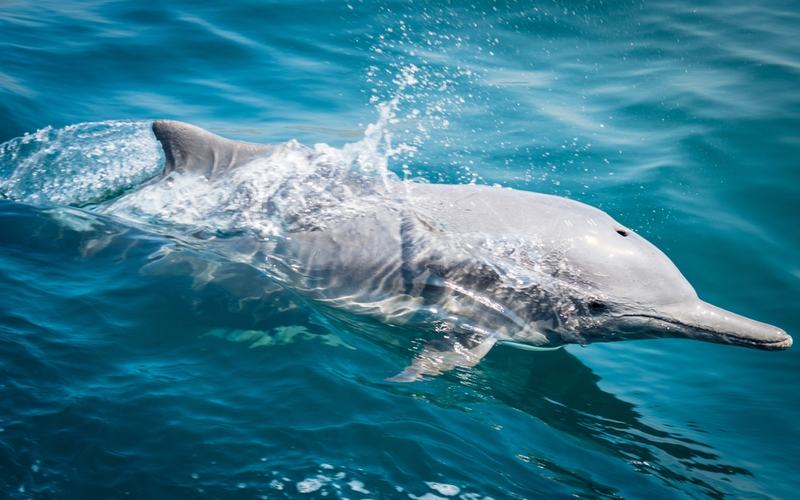
Iranian officials have discussed using mine-carrying dolphins to attack U.S. warships enforcing a naval blockade in the Strait of Hormuz, according to a Wall Street Journal report. The consideration comes amid an ongoing U.S. military operation that has halted Iran's oil exports and deepened its economic crisis.
The U.S. Navy imposed the blockade on Iranian ports about six weeks ago, targeting the shadow fleet of tankers that evaded previous sanctions by transferring oil at sea. No Iranian oil has crossed the blockade to reach buyers, data from shipping tracker Kpler showed. President Trump described the strategy as "100% foolproof," stating it has Iran "choking like a stuffed pig." The measure followed Iran's earlier attacks on ships in the strait, which disrupted a fifth of global oil and liquefied natural gas supplies. An extended ceasefire has held since early April, but hardliners in Tehran increasingly view the blockade as an act of war.
Iran's conventional navy has been decimated, with up to 90% destroyed by U.S. bombings, limiting confrontations. In response, officials have floated asymmetric tactics, including submarines, mine-carrying dolphins, and severing undersea phone cables that carry global internet traffic. An IRGC-linked news agency published a map of those cables as a warning.
Iran acquired its dolphin program in 2000 from a cash-strapped Soviet naval facility in Ukraine, purchasing 27 dolphins along with trainers and equipment. The animals were trained to attack enemy divers with harpoons strapped to their backs and to conduct kamikaze missions by carrying explosives toward ships. This would mark a revival of those capabilities amid the current standoff.
The blockade has triggered severe economic fallout in Iran. More than a million people are unemployed, food prices have soared, and the rial has lost over half its value against the dollar. Iran's Shipping Association said only 40% of trade can be rerouted, with oil stockpiles filling derelict tanks. Leadership is divided: moderates favor negotiating with the Trump administration, while hardliners push escalation to disrupt global markets.
"The blockade is increasingly viewed in Tehran not as a substitute for war, but as a different manifestation of it," said Hamidreza Azizi, a Middle East fellow at the German Institute for International and Security Affairs. He added that decision-makers may soon see conflict as less costly than enduring the blockade.
The U.S. Navy, which employs its own marine mammals for mine detection and neutralization, has ordered forces to "shoot and kill" any Iranian vessels laying mines. Trump has signaled readiness to extend the blockade until Iran meets nuclear demands. As of Sunday, the ceasefire remained in place, but tensions persist in the vital waterway.

Comments
No comments yet. Be the first to share your thoughts.