
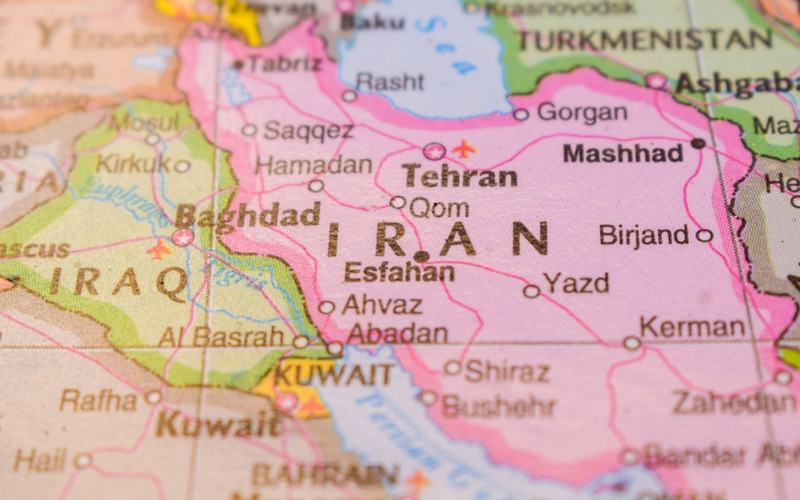
Widespread GPS and Automatic Identification System jamming disrupted navigation for more than 1,100 ships in the Middle East Gulf over the past 24 hours, maritime intelligence firm Windward reported Sunday. The interference, which surged following U.S. and Israeli strikes on Iran, falsely positioned vessels at airports, a nuclear power plant, and locations on land in Iran, Oman, and the United Arab Emirates.
The disruptions occurred amid escalating conflict in the Strait of Hormuz, a vital chokepoint for about 20% of the world's oil and gas exports. Operation Epic Fury, a joint U.S.-Israeli military campaign, began early Saturday with strikes on Iranian Revolutionary Guard Corps facilities, missile sites, and air defenses. Iran responded with missile launches toward U.S. allies in the Gulf, heightening risks to commercial shipping.
Windward noted at least 21 new jamming clusters across the UAE, Qatari, Omani, and Iranian waters, exacerbating navigational hazards in congested areas. Traffic through the Strait slowed to about one-third of normal levels, with roughly 100 transits recorded in the past day. Western-affiliated tankers and liquefied natural gas carriers paused voyages, reversed course, or sailed "dark" with AIS off to avoid detection.
Iran's Revolutionary Guards transmitted VHF warnings to ships on Saturday stating "no ship is allowed to pass the Strait of Hormuz," according to an official from the European Union's Aspides naval mission. Iran has not formally closed the waterway or deployed mines, but the threats prompted major shipping firms to suspend or reroute services.
Separate incidents compounded the chaos. The United Kingdom Maritime Trade Operations reported explosions from unknown projectiles striking at least three vessels: one west of Sharjah in the UAE, another north of Muscat in Oman, and a third northwest of Mina Saqr in the UAE. Fires broke out on two tankers but were controlled, with no confirmed casualties. The UKMTO and U.S. Maritime Administration advised vessels to avoid the Persian Gulf, Gulf of Oman, and nearby seas.
"The Persian Gulf, Strait of Hormuz, and adjacent waters are the most dangerous place right now for commercial shipping," said Jakob P. Larsen, head of maritime security at the Baltic and International Maritime Council. Over 450 vessels loitered at slow speeds or drifted in the Gulf of Oman, while a more than 200% increase in dark activity was observed off Oman and the UAE.
The electronic warfare, linked to systems operated by coastal states including Iran, began intensifying since February 28 and poses critical risks of collisions and miscompliance in the narrow strait. Oil prices climbed as markets braced for prolonged disruptions, though energy flows have not halted entirely.

Comments
No comments yet. Be the first to share your thoughts.