
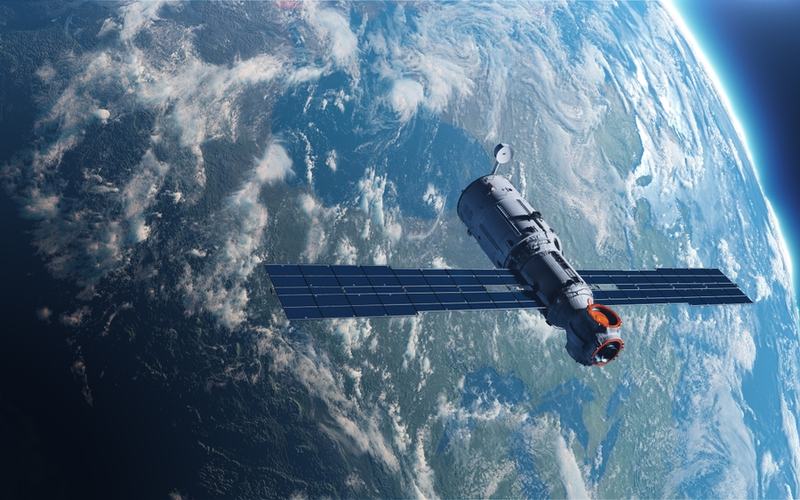
Leaked Iranian military documents reveal that the Islamic Revolutionary Guard Corps' Aerospace Force secretly acquired a Chinese-built spy satellite in late 2024, granting Tehran enhanced surveillance capabilities over U.S. military installations in the Middle East.
The satellite, known as TEE-01B and developed by the Chinese company Earth Eye Co., was purchased after its launch into orbit from China. As part of the deal, the IRGC gained access to ground stations operated by Beijing-based Emposat, enabling control and data reception from a network spanning Asia, Latin America, and beyond.
Financial Times investigators obtained the documents, which include time-stamped coordinate lists, satellite imagery, and orbital analysis showing IRGC commanders directing the satellite to image key U.S. sites. Targets included Prince Sultan Air Base in Saudi Arabia, where images were captured on March 13, 14, and 15 before and after Iranian drone and missile strikes. On March 14, President Donald Trump confirmed that U.S. planes at the base sustained damage, including five Air Force refueling aircraft.
Other monitored locations encompassed Muwaffaq Salti Air Base in Jordan, areas near the U.S. Fifth Fleet's base in Manama, Bahrain, and Erbil airport in Iraq. The imaging coincided with IRGC-claimed attacks on these facilities amid a five-week conflict that began with a U.S.-Israeli bombing campaign against Iran on February 28.
That war targeted Iran's ballistic missile and nuclear programs, prompting Tehran to launch retaliatory strikes across the region and blockade the Strait of Hormuz. A ceasefire took effect two weeks ago, following international pressure. Russia and China vetoed a U.N. Security Council resolution last week to reopen the strait.
China's foreign ministry denied the Financial Times report, labeling it untrue and accusing parties of spreading rumors with ulterior motives. "China firmly opposes this kind of practice," a spokesperson stated. Neither Earth Eye nor Emposat responded to inquiries. The White House, CIA, and Pentagon have not commented publicly on the revelations.
The acquisition marks an upgrade for Iran's reconnaissance abilities, previously reliant on lower-resolution domestic satellites or foreign intelligence sharing, such as Russian imagery provided early in the conflict. U.S. intelligence has separately indicated China may supply shoulder-fired air defense systems to Iran, though Beijing denies arming any side.
Reuters could not independently verify the leaked documents, but the findings underscore deepening military ties between Tehran and Beijing amid heightened regional tensions.

Comments
No comments yet. Be the first to share your thoughts.