
Iran's parliament speaker threatened Sunday to set U.S. ground troops on fire as American forces surged in the Middle East on the 30th day of the war. Mohammad Bagher Qalibaf accused the United States of secretly planning an invasion while pursuing negotiations. Iranian Revolutionary Guard Corps officials echoed the warnings and threatened attacks on American and Israeli universities in the region.
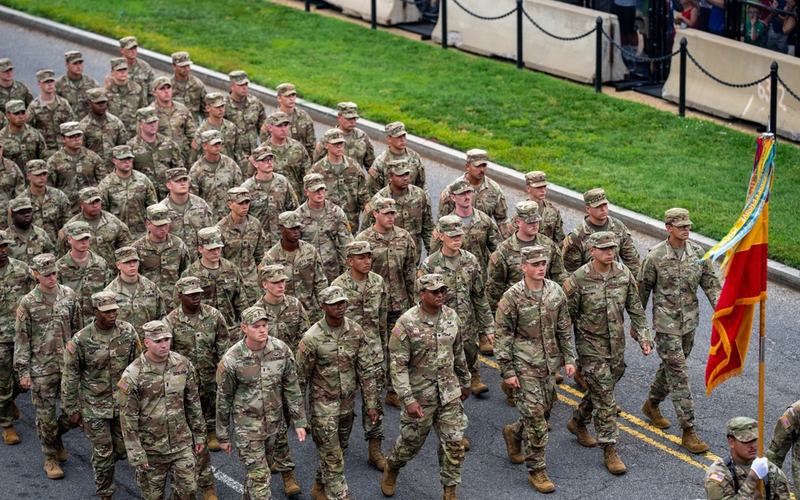
The U.S. deployed over 50,000 troops to the region, including 2,500 Marines aboard the USS Tripoli and 2,000 soldiers from the Army's 82nd Airborne Division positioned within striking distance of Iran. The Pentagon prepared for weeks-long limited ground operations, potentially targeting Kharg Island, Iran's main oil export terminal. U.S. Central Command released video of recent strikes sinking Iranian naval vessels.
The conflict began on February 28, 2026, when the United States and Israel launched Operation Epic Fury and Roaring Lion, surprise airstrikes on over 500 Iranian military, nuclear, and government sites. The attacks killed Supreme Leader Ali Khamenei and senior officials, aiming to degrade Iran's missile capabilities, prevent nuclear weapon development, and support regime change. Iran retaliated with Operation True Promise IV, firing over 1,200 ballistic missiles and 2,300 drones at Israel, U.S. bases in the Gulf, and energy infrastructure.
Israel conducted strikes on Sunday on Tehran's infrastructure, including a television station and the port of Bandar Khamir, killing five people. Iran fired multiple missile barrages at Israel, most intercepted, though debris caused fires at an industrial site. Yemen's Houthis entered the war on March 28, launching their first missiles at Israel. Gulf states, including Saudi Arabia, the UAE, Kuwait, and Qatar intercepted dozens of Iranian drones and missiles.
Iran closed the Strait of Hormuz, disrupting one-fifth of global oil transit and driving prices above $114 per barrel. U.S. strikes damaged Kharg Island, halting 90 percent of Iran's oil exports, while Iran hit Saudi and UAE facilities. The U.S. military spent $18 billion by March 19 and requested $200 billion more.
Casualties mounted, with Iran reporting 2,076 to 6,900 killed, including over 6,000 military personnel. The U.S. lost 15 soldiers, Israel five soldiers, and 24 civilians, and thousands more across Lebanon and the Gulf states.
Foreign ministers from Saudi Arabia, Egypt, Turkey, and Pakistan met in Islamabad to advance de-escalation, endorsing Pakistan as host for potential U.S.-Iran talks. Iran rejected a U.S. 15-point ceasefire proposal. President Trump postponed strikes on Iranian power plants but set an April 6 deadline for reopening the Strait.

Comments
No comments yet. Be the first to share your thoughts.