
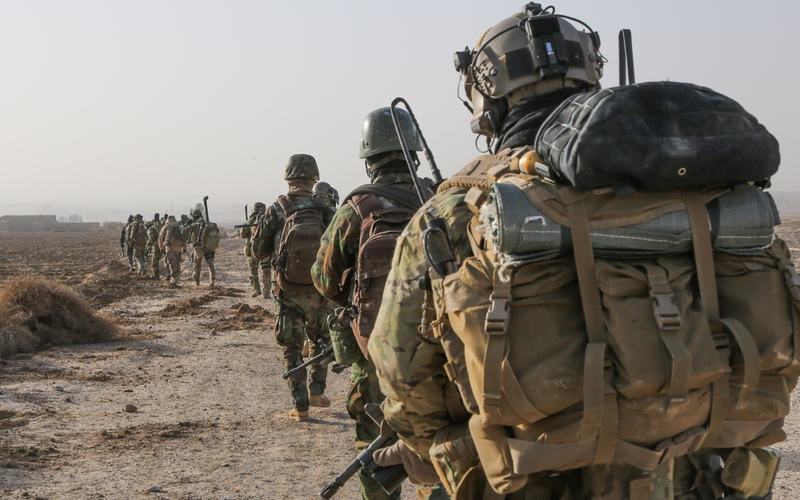
Israel's military announced plans Sunday to expand its ground operations in southern Lebanon targeting Hezbollah militants, as clashes entered their third week.
Lieutenant General Eyal Zamir, the army chief of staff, described the campaign as a prolonged effort that has only begun, with forces striking more than 2,000 targets, dozens of weapons storage sites, and eliminating hundreds of Hezbollah fighters. "We are now preparing to advance the targeted ground operations and strikes according to an organized plan," Zamir said. "We will not stop until the threat is pushed away from the border and long-term security is ensured for the residents of northern Israel."
The ground operations began on March 16 with limited and targeted raids by the IDF's 91st Division into southern Lebanon to dismantle Hezbollah infrastructure and create a buffer zone for Israeli border communities. Troops have since pushed deeper, reaching areas south of the Litani River, about 30 kilometers from the border, amid ongoing airstrikes on bridges, homes used by militants, and command centers.
The escalation traces back to March 2, when Hezbollah launched rockets and drones into Israel following the killing of Iran's Supreme Leader Ali Khamenei in U.S.-Israeli strikes. The group, acting on direction from Iran's Islamic Revolutionary Guard Corps, ended a ceasefire from November 2024 and vowed continued resistance. Hezbollah has since fired dozens of rockets at northern Israeli towns, including Kiryat Shmona and Nahariya, causing limited casualties.
Israel's response has included over 2,000 airstrikes on Hezbollah positions in Beirut's southern suburbs, southern villages, and financial networks linked to the group. Defense Minister Israel Katz ordered accelerated demolitions of structures in border areas deemed threats and stated displaced Lebanese residents south of the Litani River cannot return until northern Israeli safety is assured.
Lebanon's Health Ministry reports at least 1,001 people killed and more than 2,100 wounded since March 2, with over one million displaced—about one-fifth of the population. The United Nations issued a $308 million flash appeal for humanitarian aid targeting 800,000 displaced early in the conflict. Hezbollah deputy leader Naim Qassem rejected Israeli threats, stating any ground advance would lead to gains for resistance fighters in close combat.
International leaders expressed concern over a potential large-scale invasion. The leaders of Canada, France, Germany, Italy, and the United Kingdom warned in a joint statement of devastating humanitarian consequences. The Trump administration supports Israel's efforts to disarm Hezbollah but urged restraint on strikes against Lebanese state infrastructure, including Beirut's airport. Lebanon's government, which banned Hezbollah's military activities, has appealed for direct talks with Israel facilitated by the U.S.
Israeli officials indicate the operations could expand significantly, potentially mirroring tactics used in Gaza to clear militant infrastructure south of the Litani River, the largest such incursion since 2006.

Comments
No comments yet. Be the first to share your thoughts.