
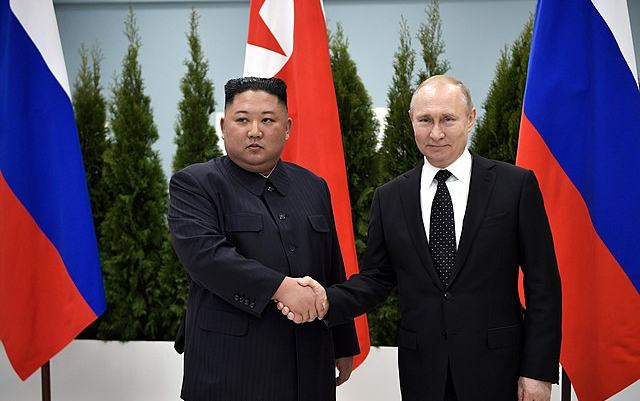
North Korean leader Kim Jong Un pledged yesterday to irreversibly cement his nation's status as a nuclear power during a policy speech to the Supreme People's Assembly in Pyongyang.
The address came on the second day of the rubber-stamp legislature's first session of its 15th term, where lawmakers approved constitutional amendments, a new five-year economic plan, and a 2026 state budget that allocates 15.8% to defense spending, including funds for nuclear deterrence and military capabilities. Kim, reappointed as president of the State Affairs Commission, emphasized expanding North Korea's "self-defensive nuclear deterrent" as essential for national security, regional stability, and economic growth. "The government of our republic will continue to consolidate our absolutely irreversible status as a nuclear power," he said, rejecting any trade of disarmament for aid or guarantees.
Kim argued that nuclear weapons have prevented war, allowing resources to shift toward development. He accused the United States and allies of regional destabilization through strategic asset deployments and global "state terrorism and aggression," remarks analysts link to recent U.S. actions against Iran. "Whether adversaries choose confrontation or peaceful coexistence is up to them, and we are prepared to respond to any choice," he added.
The leader hardened rhetoric toward South Korea, formally designating it the "most hostile state" and warning of a "merciless" response to any sovereignty infringement, without hesitation or restraint." This builds on his 2024 abandonment of peaceful reunification goals, with expected constitutional changes codifying Seoul as a permanent enemy and erasing shared nationhood references. South Korea's presidential office called the comments "undesirable for peaceful coexistence," stressing dialogue for security.
On the economy, Kim urged full implementation of the new plan to modernize industry, increase electricity and coal output, boost food production, and expand housing. North Korea faces chronic shortages amid heavy sanctions.
The session featured a message from Russian President Vladimir Putin congratulating Kim and pledging deeper ties. Pyongyang has sent troops and equipment to support Moscow's Ukraine war, possibly gaining aid and technology in return. Kim invited Belarusian President Alexander Lukashenko for a visit.
Analysts view the speech as reinforcing nuclear needs amid perceived threats, stripping South Korea of compatriot status, and signaling potential measured U.S. engagement for sanctions relief while prioritizing Russia. Dialogue with Washington and Seoul has stalled since the 2019 U.S. summit collapse over sanctions.

Comments
No comments yet. Be the first to share your thoughts.