
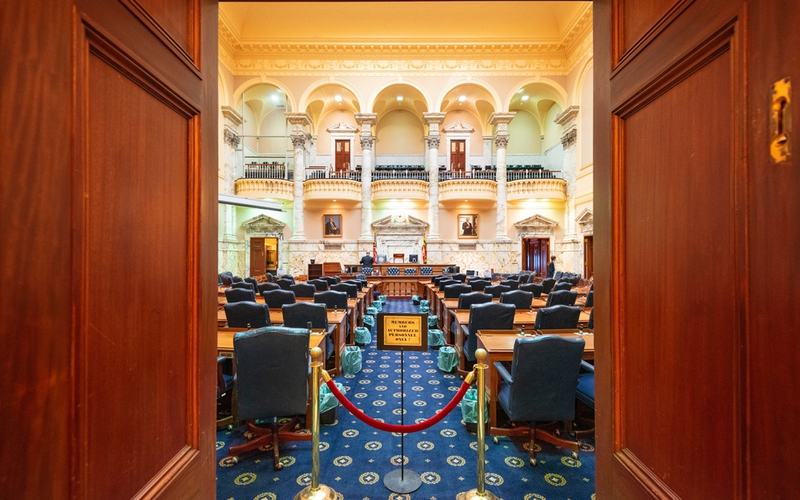
Maryland lawmakers declined to advance a proposed mid-decade redistricting plan backed by Gov. Wes Moore, allowing the measure to expire as the state’s legislative session concluded late Monday. The proposal, aimed at reshaping congressional districts ahead of upcoming elections, stalled in the state Senate despite Democratic control of the legislature.
The plan would have adjusted district boundaries in a way that could have strengthened Democratic positioning in future congressional races, including making it easier to challenge the state’s lone Republican member of the U.S. House. However, opposition within the party proved decisive, with Senate leadership declining to bring the measure forward over concerns it could face legal setbacks.
State Senate President Bill Ferguson and other Democrats warned that revising the map mid-decade could trigger court challenges that might ultimately result in a less favorable outcome for the party. Lawmakers pointed to previous redistricting efforts that were struck down by courts as evidence of the risks involved.
Moore, who supported the proposal, argued that changes were necessary in response to similar efforts in Republican-led states. He has been vocal about broader national redistricting battles, framing the issue as part of a larger dispute over election rules and political representation.
The failed effort leaves Maryland’s current congressional map intact, where Democrats already hold a 7–1 advantage in the state’s U.S. House delegation. The proposal had passed the Maryland House earlier this year but failed to gain traction in the Senate before the legislative deadline.
The development comes as redistricting battles continue across multiple states. Republican-led legislatures, including in Florida and Texas, are pursuing their own efforts to redraw congressional maps, while Democrats in states such as Virginia are exploring voter-driven approaches through referendums.
Mid-decade redistricting remains relatively uncommon but has gained attention in recent years as both parties look for ways to influence the balance of power in Congress. In Maryland, internal disagreements ultimately halted the effort, highlighting divisions even within a dominant party over how aggressively to pursue map changes.

Comments
No comments yet. Be the first to share your thoughts.