
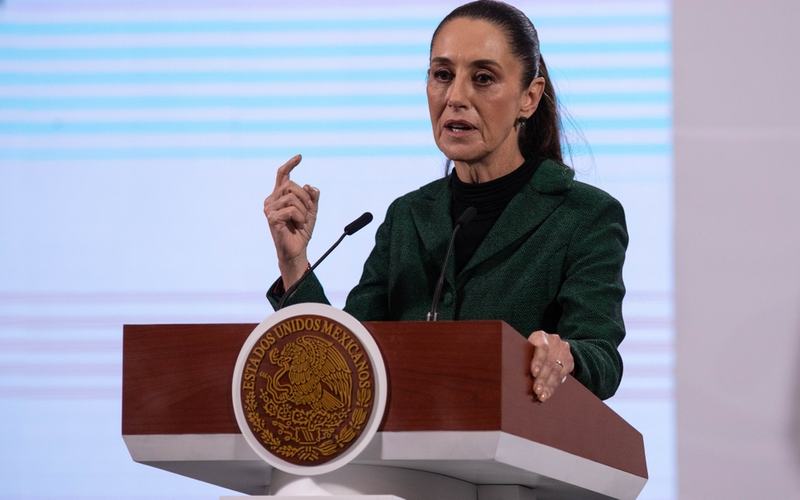
Mexican President Claudia Sheinbaum submitted a bill to the Chamber of Deputies on March 4, 2026, proposing sweeping changes to the country's electoral system. The initiative, framed as a "Decálogo por la Democracia," seeks to amend the Constitution to cut public spending on elections by 25 percent while enhancing transparency and democratic participation.
Sheinbaum first announced the reform on February 25, stating it would be sent to Congress the following week. The bill was received by House President Kenia López Rabadán and referred to the Constitutional Affairs and Political-Electoral Reform committees. Pablo Gómez, head of the government's electoral reform commission, highlighted that Mexico spent $3.55 billion on its 2024 elections, underscoring the potential savings.
Key proposals include reducing the Senate from 128 to 96 members by eliminating 32 proportional representation seats, with all senators to be elected via majority and first-minority votes in each state. For the lower house, the 200 proportional representation seats would shift to a hybrid model: 100 allocated to top runner-ups in single-member districts and 100 via direct votes in regional constituencies, including spots for Mexicans abroad.
The reform targets a 25 percent cut in public financing for parties, lowering the funding formula from 65 percent to 48.75 percent of the Unidad de Medida y Actualización. Campaign airtime on radio and TV would drop from 48 to 35 minutes daily. Additional measures address AI in elections, requiring labels on generated content and banning bots; stricter party finance rules, including daily transaction reports and bans on cash donations; faster vote counting; and caps on salaries for officials, some of whom earn more than the president.
The bill promotes participatory democracy through referendums and consultations at local levels, affirmative actions for underrepresented groups like Indigenous and Afro-Mexicans, easier voting for expatriates, and bans on family succession in office and immediate reelection starting in 2030.
The package has drawn opposition from across the spectrum. Morena's allies, the Labor Party and Green Party, resist changes to proportional representation that could jeopardize smaller parties. Main opposition parties PAN and PRI decry it as a power grab that weakens democracy and party pluralism. This requires a two-thirds majority in both chambers, which Morena lacks without coalition support.
Sheinbaum has indicated a "Plan B" if the bill stalls, though details remain undisclosed. The National Electoral Institute plans to review the proposal and provide technical input.

Comments
No comments yet. Be the first to share your thoughts.