
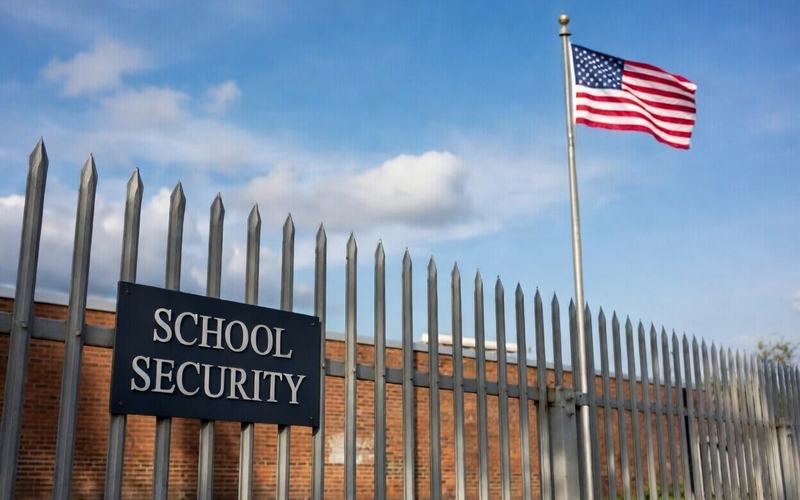
There are few issues in America that should unite everyone. Protecting children from violence at school is one of them.
But in Minnesota, even school safety has become a casualty of union politics.
During a recent hearing before the Minnesota Senate Education Finance Committee, lawmakers considered Minnesota Senate File 5000. It's a proposal designed to provide grants for schools to strengthen security against threats like active shooters.
The bill was straightforward. It would help schools upgrade security infrastructure, improve controlled entryways, and strengthen emergency preparedness.
But there was one detail that the state’s teachers union could not accept.
The bill applied to all schools educating Minnesota students, public schools, charter schools, private schools, and tribal contract schools.
That’s when Education Minnesota stepped in to oppose it.
Not because the safety measures were ineffective.
Not because the funding was wasteful.
Not because the threat of school violence is exaggerated.
The union opposed the bill because some of the safety funding might go to schools outside the traditional public-school system.
Let that sink in.
According to the union’s position, if safety funding cannot be restricted solely to institutions within its sphere of influence, then no school should receive it.
This wasn’t a debate about education policy or curriculum. It was a debate about protecting children from violence.
And the union chose politics.
More than 850,000 students attend K-12 schools across Minnesota in public districts, charter schools, private schools, and tribal schools.
None of those students are immune from threats. Violence does not check whether a school is unionized before it attacks.
Ironically, the union’s opposition also undermines the safety of teachers themselves. When a school becomes more secure, everyone inside it benefits.
But the position taken by Education Minnesota reveals something important. Maintaining political leverage over education policy matters more to union leadership than ensuring every child has access to basic security protections.
If an organization claiming to advocate for educators is willing to oppose safety upgrades for schools simply because those schools fall outside its membership base, who exactly is that organization serving?
It’s certainly not every child.
School safety should be universal. A child’s right to protection should not depend on whether their parents chose a public school, a charter school, a private school, or a tribal school.
Yet the debate over SF 5000 exposed a disturbing reality. Some powerful organizations are willing to play politics even when the stakes involve the safety of children.
Minnesota families deserve leaders willing to protect every student.
Comments
No comments yet. Be the first to share your thoughts.