
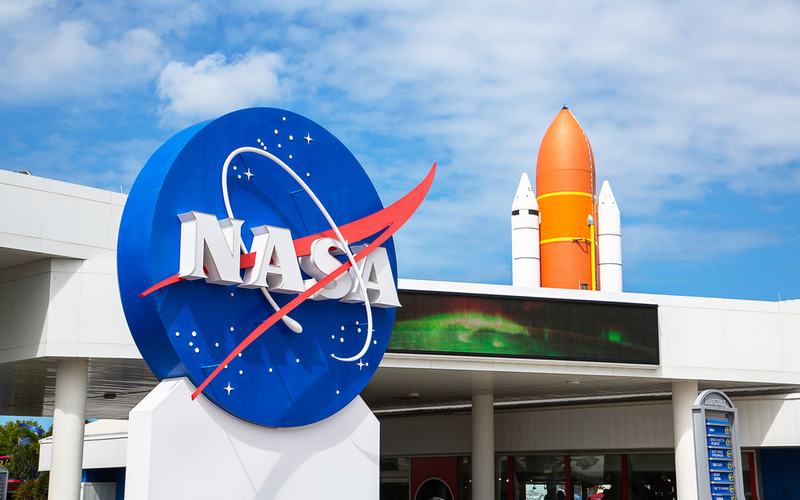
NASA is preparing to launch Artemis II, the agency’s first astronaut mission beyond low Earth orbit since the Apollo era, with liftoff targeted for no earlier than 6:24 p.m. EDT on April 1 from Kennedy Space Center in Florida. The mission will send four astronauts on a roughly 10-day journey around the Moon and back, serving as a critical test for future deep-space exploration.
The Artemis II crew includes NASA astronauts Reid Wiseman, Victor Glover, and Christina Koch, along with Canadian Space Agency astronaut Jeremy Hansen. The mission will be the first time humans travel to the Moon’s vicinity since 1972, and it represents a major step toward NASA’s long-term goal of establishing a sustained presence on the lunar surface and eventually sending astronauts to Mars.
Launching aboard NASA’s Space Launch System rocket, the crew will travel inside the Orion spacecraft, which is designed to carry astronauts into deep space. The flight will test key systems, including life support, navigation, communications, and the spacecraft’s heat shield, under real mission conditions with humans on board. NASA officials have emphasized that Artemis II is a test flight, meaning the crew is prepared for a range of outcomes, including a shorter mission if necessary.
Commander Reid Wiseman, a former Navy test pilot and previous International Space Station astronaut, said the mission represents a long-awaited return to deep space exploration. “The nation and the world have been waiting a long time to do this again,” Wiseman said as the crew arrived in Florida for final preparations.
The crew brings extensive experience. Wiseman and pilot Victor Glover have both spent months aboard the International Space Station, while mission specialist Christina Koch holds the record for the longest continuous spaceflight by a woman at 328 days. Hansen, making his first trip to space, represents Canada’s role in international space partnerships.
The mission also carries historic significance. Glover is set to become the first Black astronaut to travel to the Moon’s vicinity, Koch the first woman, and Hansen the first non-American astronaut to venture beyond low Earth orbit. NASA officials have highlighted the crew as part of a broader effort to expand participation in human spaceflight.
Artemis II will not attempt a lunar landing, but it will pave the way for Artemis III and future missions that aim to return astronauts to the Moon’s surface. The Artemis program, backed by multiple international and commercial partners, is a central component of NASA’s long-term exploration strategy. Major contractors include Boeing, which developed the SLS core stage, Northrop Grumman, which built the rocket boosters, and Lockheed Martin, which produced the Orion spacecraft.
The astronauts have spent more than two years training for the mission and recently entered the final phase of preparation, including quarantine protocols to ensure crew health before launch. They are expected to move into crew quarters at Kennedy Space Center in the days leading up to liftoff.
NASA will provide continuous live coverage of prelaunch, launch, and mission events through its streaming platforms, including NASA+ and YouTube, allowing the public to follow the mission from liftoff through splashdown. Additional launch opportunities extend through early April if weather or technical conditions delay the initial attempt.
As the countdown continues, Artemis II stands as a defining moment for the U.S. space program, signaling a return to human exploration beyond Earth orbit and laying the groundwork for the next era of lunar and deep-space missions.

Comments
No comments yet. Be the first to share your thoughts.