
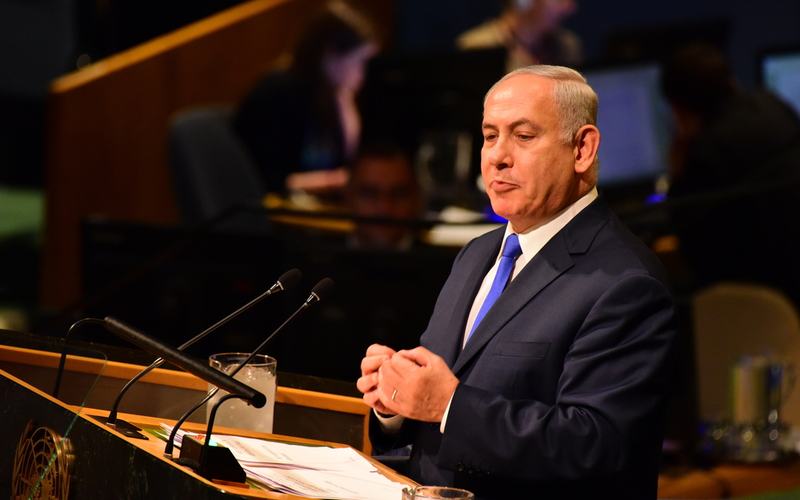
Prime Minister Benjamin Netanyahu vowed Saturday that Israel's military campaign against Iran remains ongoing, emphasizing historic achievements while insisting more work lies ahead.
In a video address released at 9 p.m. At Israel time, Netanyahu stated the campaign "is not over," adding, "We hit them, we still have more to do." He described how Iran "wanted to strangle us, and we are strangling them," highlighting Israel's reversal of fortunes against the regime.
Netanyahu touted successes from Operation Roaring Lion, including the elimination of 12 nuclear scientists, strikes on nuclear facilities, and damage to Iran's steel industry, gas production, fuels, bridges, and railways. He claimed these actions reduced the Iranian regime to its weakest state since 1979, with its missile stockpiles depleting and internal leadership conflicts prompting pleas for a ceasefire.
The prime minister credited precise intelligence and air force operations for breaking the "barrier of fear" by striking deep into Iran, first last June and now more extensively. He noted lifelong efforts to thwart Iran's nuclear ambitions through covert operations and public warnings, which he said the world previously ignored.
This comes amid U.S.-Iran ceasefire talks in Islamabad, Pakistan, where negotiators discussed terms despite disagreements. Netanyahu portrayed Iran as battered and begging for respite, while Israel positions itself as the region's strongest power, drawing approaches from neighbors like Lebanon for direct negotiations conditional on Hezbollah's disarmament.
Israel has continued strikes on Iran-backed Hezbollah in Lebanon, operations not covered by the tentative U.S.-brokered truce. Netanyahu affirmed readiness to resume full combat if needed, keeping a "finger on the trigger."
The war erupted on February 28, 2026, with Israeli strikes aimed at dismantling Iran's nuclear program, missile production, and proxy support networks. Initial goals included regime destabilization and uprising conditions, though not fully realized.
Domestically, polls show majority opposition to the ceasefire, with 51-56% disapproving and 79% backing ongoing Hezbollah strikes. Likud slipped to 22-25 projected Knesset seats, weakening Netanyahu's coalition to 50-51 seats.
Opposition leaders accused Netanyahu of failing to destroy Iran's nuclear capabilities or curb its missiles and proxies, calling the truce a strategic shortfall. Despite criticism, Netanyahu framed Israel's posture as one of immense strength and determination.

Comments
No comments yet. Be the first to share your thoughts.