
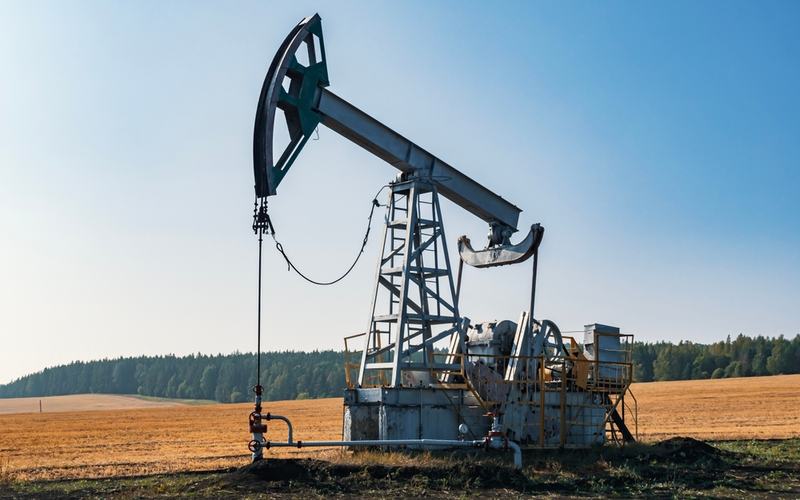
Crude oil prices surged as much as 13% late Sunday before paring some gains, crossing key thresholds amid fears of prolonged supply disruptions from the Strait of Hormuz after U.S. and Israeli strikes on Iran.
Brent crude futures climbed above $82 per barrel in initial Asian trading early Monday, up more than 13% from Friday's close of $72.87, before settling around $76.30, a 4.7% increase. West Texas Intermediate futures rose nearly 10% to above $72 before easing to about $69.94, up 4.35% on the day.
The spike followed coordinated U.S.-Israeli airstrikes launched Saturday, February 28, targeting Iran's nuclear facilities and regime leadership, including Supreme Leader Ayatollah Ali Khamenei, whom Iranian state media reported killed. Iran retaliated Sunday with missile barrages on Israeli cities like Tel Aviv and Jerusalem, U.S. military assets, and Gulf states including Bahrain and the UAE, killing at least nine in Israel and three U.S. troops.
Compounding energy market jitters, Iran attacked at least three oil tankers near the Strait of Hormuz, through which roughly 20% of global oil flows daily, about 15 million barrels per day. Ship traffic plummeted 70%, with major carriers suspending transits and satellite imagery showing frozen maritime activity as Iran's Revolutionary Guard halted passages.
President Trump stated the strikes would continue until U.S. objectives are met, signaling a potentially extended campaign. Casualties mounted across the region, with over 200 reported dead in Iran and strikes rippling into Iraq, Kuwait, and the UAE.
Analysts warned of further upside risks, with some forecasting $100 to $120 per barrel if Hormuz disruptions persist, though alternative pipelines could reroute 5-7 million barrels daily. OPEC+ recently approved a modest output hike, but it offers a limited buffer against war-related shocks.
The rally pressured equities lower while boosting safe-haven assets like gold, which rose over 2%. U.S. gasoline futures also climbed, hinting at higher pump prices in the coming weeks for American drivers.

Comments
No comments yet. Be the first to share your thoughts.