
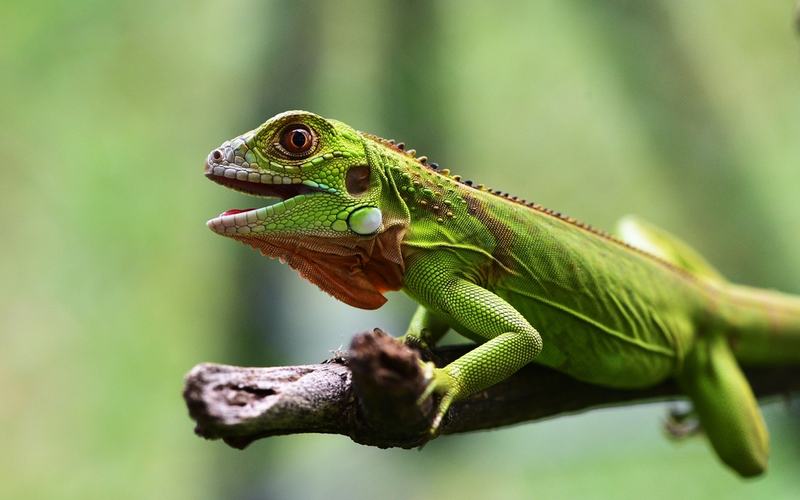
The Florida Fish and Wildlife Conservation Commission (FWC) reported that 5,195 cold-stunned green iguanas were collected on Feb. 1 and Feb. 2 under a temporary two-day exemption allowing the public to capture the nonnative reptiles without a permit. The mass removal followed a record-setting cold snap in South Florida that left many iguanas unable to move and falling from trees.
Roger Young, FWC executive director, said the effort was made possible through the coordination of agency staff, partner organizations, and residents who collected the reptiles from their properties. “The removal of over 5,000 of these nonnative lizards in such a short time span was only possible thanks to the coordinated efforts of many staff members in multiple FWC divisions and offices, our partners and, of course, the many residents that took the time to collect and turn in cold-stunned iguanas,” he said.
The majority of iguanas, 3,882, were turned in at the FWC office in Sunrise, near Fort Lauderdale. Other locations included Tequesta (1,075 iguanas), the Florida Keys (215), and Fort Myers (23). Collected reptiles were either transferred to permit holders for relocation or humanely euthanized by trained FWC staff if transfer was not possible.
Green iguanas are considered an invasive species in Florida because of their negative impact on the environment and local economy. They damage property, leave droppings on docks, boats, porches, and pool areas, and burrow into canal banks and vacant lots. Because of their invasive status, iguanas may be killed on private property without special permits, provided anti-cruelty laws are followed.
FWC officials warned residents not to bring cold-stunned iguanas indoors. The reptiles are alive but temporarily paralyzed in cold weather, and once recovered, can act defensively with sharp teeth, claws, and strong tails. During the freeze, Miami recorded lows of 35 degrees, while West Palm Beach fell to 30 degrees, breaking records set in 1909.
Green iguanas were first reported in South Florida in the 1960s and have since spread widely, aided by man-made canals that serve as dispersal corridors. The FWC confirmed it is no longer accepting live iguanas from the public following the two-day collection effort.

Comments
No comments yet. Be the first to share your thoughts.