
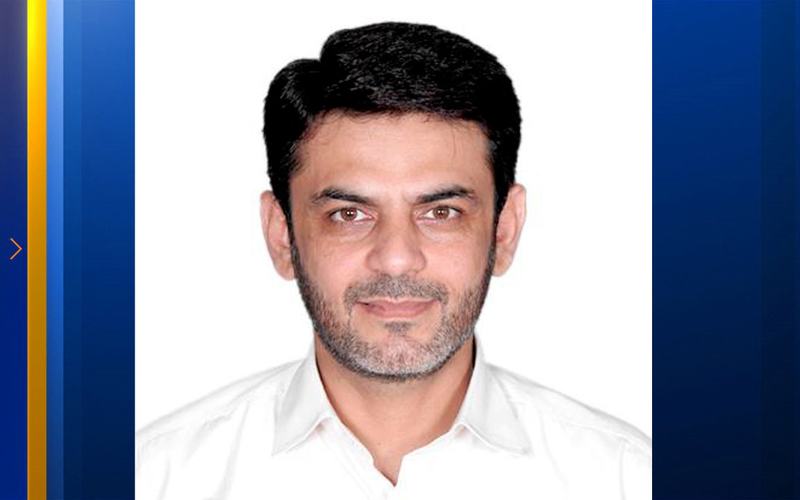
A federal jury in Brooklyn convicted Asif Merchant, a 47-year-old Pakistani national, of plotting to assassinate President Donald Trump and other U.S. politicians at the direction of Iran's Islamic Revolutionary Guard Corps.
The verdict came after a week-long trial in the U.S. District Court for the Eastern District of New York. Jurors deliberated for less than two hours before finding Merchant guilty on charges of murder-for-hire and attempted terrorism, offenses that carry a maximum penalty of life in prison. Sentencing will be determined later by Judge Eric Komitee.
Prosecutors presented evidence that Merchant was recruited by an Iran-based handler as early as 2022 or 2023 to carry out multiple tasks in the United States, including assassinating a high-profile politician, staging a protest at a political rally, stealing documents from a residence, and laundering money. Merchant entered the U.S. in April 2024 and, over the following months, sought to hire hit men.
In June 2024, Merchant met with two men he believed to be assassins at a Queens motel. Unbeknownst to him, they were undercover FBI agents. He sketched a crude diagram on notebook paper depicting a rally stage, an arrow pointing to the president's position marked by an orange vape device, and asked, "This is the target. How will it die?" Prosecutors said the plan targeted Trump at a Republican rally during the 2024 election campaign. Merchant also referenced possible alternatives, including former President Joe Biden and Nikki Haley, and handed over $5,000 advances to each agent, promising up to $1 million upon completion.
The merchant used code words in communications, such as "yarn dye" for the assassination, "T-shirt" for the protest, "flannel shirt" for the theft, and "denim jeans" for money laundering. He shared Facebook images depicting Trump digging his own grave and holding his severed head, along with calls for revenge following the 2020 U.S. drone strike that killed Iranian general Qassem Soleimani.
The plot unraveled after a tip from Nadeem Ali, a New York-based contact Merchant approached, who alerted the FBI. Merchant was arrested on July 14, 2024, in Richmond, Texas.
During the trial, which began with jury selection on February 24, Merchant took the stand in his own defense. He admitted working for Iranian intelligence but claimed he had no intention of following through, alleging his handler coerced him by threatening his wife and child in Tehran. Merchant said he suspected he was under surveillance and planned to fail the mission to seek U.S. protection. His lawyers argued it was "role play" and pointed to his careless actions, like leaving phones on during meetings, as evidence of a lack of intent.
Assistant U.S. Attorney Gilbert Rein told jurors that Merchant rigorously tested his recruits on code words, showing commitment to the scheme. Post-verdict, defense attorney Joshua Lax expressed disappointment but confidence in resolving legal issues ahead.
The case highlights ongoing concerns about Iranian efforts to target U.S. figures, coming amid other foiled plots linked to Tehran. Merchant, a former banker with failed businesses, faces sentencing at a date to be set.

Comments
No comments yet. Be the first to share your thoughts.