
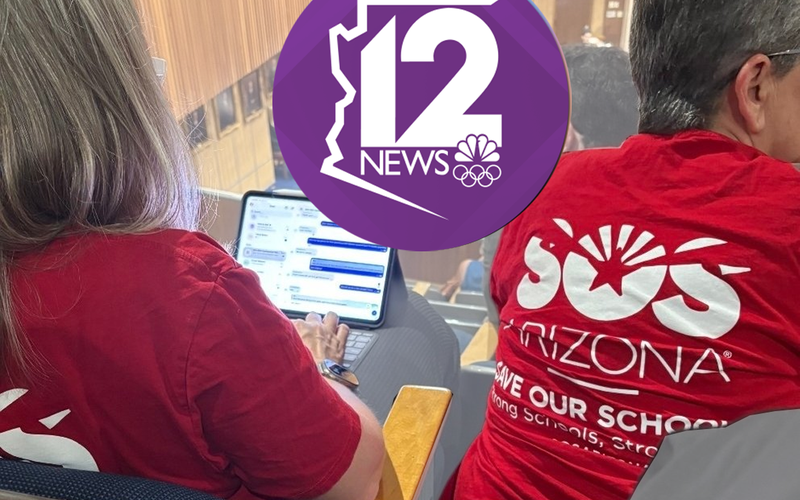
On the final day of Arizona’s legislative session, dozens of anti-ESA activists flooded the Capitol to block a compromise that would have imposed modest reforms on the Empowerment Scholarship Account program. The Arizona Education Association, the state’s largest teachers union, was actively working to prevent any compromise that would preserve or expand parental choice. It was in this charged environment that Craig Harris, a political reporter for 12News, was privately coordinating with one of the leading activist groups opposing those reforms.
Screenshots of text messages show Harris advising Save Our Schools Arizona — a teachers union-backed group — on where to position themselves inside the state Capitol during legislative debates he was assigned to cover. The group chat was even named “ESA Confidential 12News.” Harris confirmed the authenticity of the messages when they surfaced.
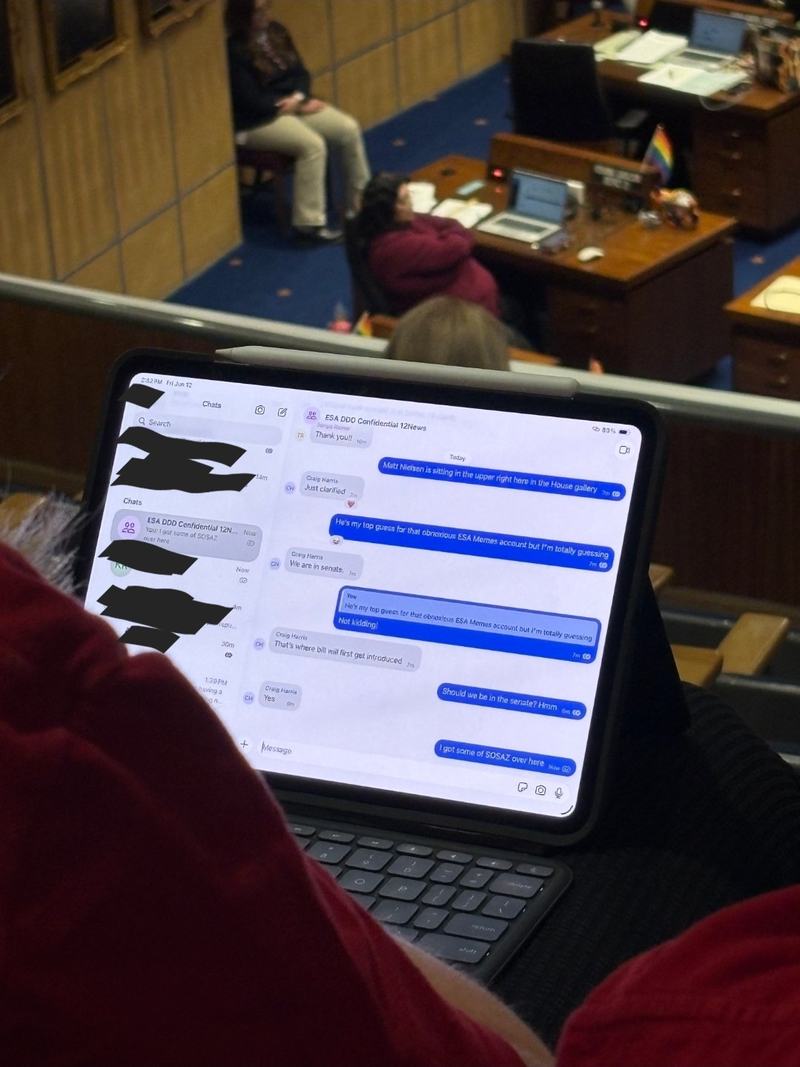
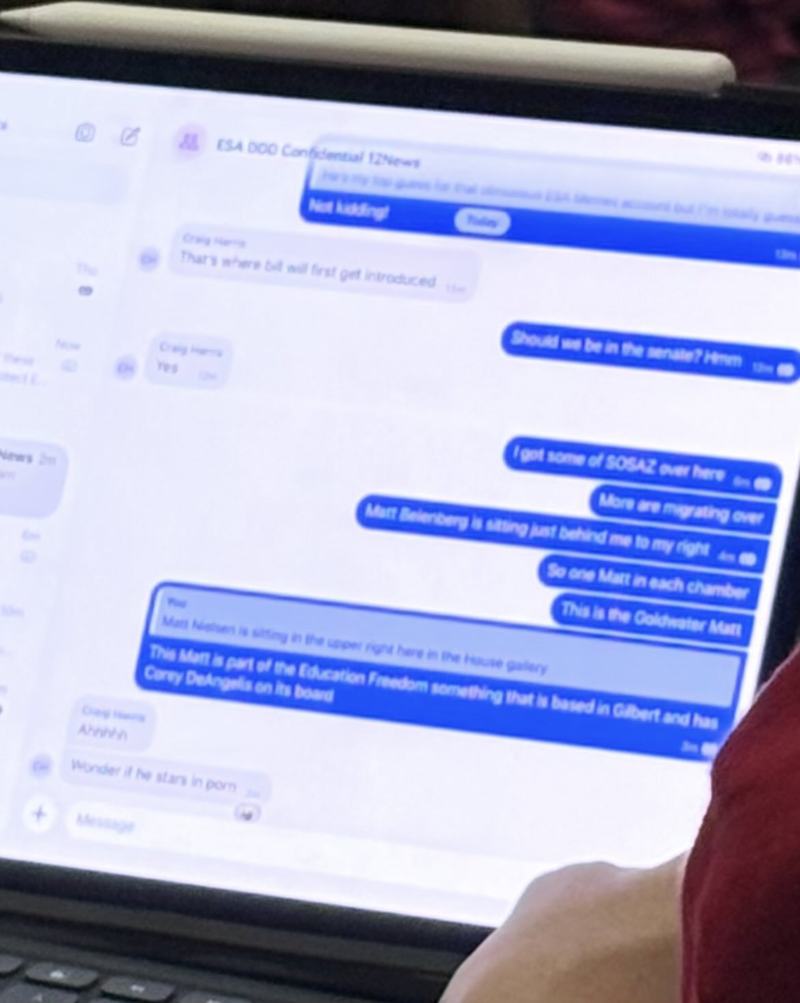
This is not neutral journalism. It is participation in one side of a contested policy fight while pretending to report on it objectively.
Harris has published stories and social media commentary that repeatedly frame ESA supporters as financially motivated or dishonest, while applying far less scrutiny to the groups he was privately assisting. One exchange captured in the messages went further. Harris crudely speculated about a school choice advocate “stars in porn.” That kind of personal attack has no place in professional reporting, especially when directed at citizens exercising their First Amendment rights at the Capitol.
This is not an isolated lapse. Harris has a documented pattern of errors and distortions in his ESA coverage. He promoted dramatically inflated fraud claims that the Arizona Department of Education later had to correct. He asserted that no military families had spoken at a hearing even after written statements from military parents were submitted. He dismissed a student with disabilities who described real harm from a proposed anti-ESA ballot initiative, claiming the student was lying — despite the plain text of the initiative supporting the student’s concern.
When challenged on these points, Harris has shifted goalposts rather than issuing clear corrections. He has also deleted or scrubbed social media posts after being confronted with evidence of coordination.
His previous work at Gannett (parent company of the Arizona Republic and USA Today) drew similar scrutiny. He was connected to reporting that became the subject of a defamation lawsuit filed against Gannett by Ryan, LLC, alleging false and reckless claims. That case remains active in the courts.
None of this occurs in a vacuum. Gallup’s latest polling found that only 28% of Americans express a great deal or fair amount of trust in mass media — the first time the number has fallen below 30% in the poll’s history. Trust has been trending downward for years, especially among independents and conservatives. Incidents like this accelerate the decline. When a reporter assigned to cover education policy is actively strategizing with one side and attacking citizens on the other during the most consequential moments of the legislative session, the public has every reason to treat the coverage with skepticism.
Journalistic ethics are not abstract. The Society of Professional Journalists Code of Ethics emphasizes independence, transparency, and accountability. Coordinating with an advocacy group while covering that same group’s legislative efforts violates the independence standard. Publishing personal attacks and disputed claims without transparent correction violates accountability.
Arizona families deserve better. They have built the nation’s most robust school choice system because they want real options for their children. When journalists abandon neutrality to work against those options they are not defending public education. They are undermining the public’s right to honest information.
12News has principles of ethical journalism posted on its site. Those principles include truth, independence, and integrity. Harris’s documented conduct raises serious questions about whether those standards are being enforced.
Parents are not asking for favorable coverage. They are asking for accurate reporting and basic professional boundaries. When those boundaries collapse during high-stakes legislative fights, the damage extends beyond one reporter or one station. It deepens the already historic distrust between the public and the institutions that claim to inform them.
Comments
No comments yet. Be the first to share your thoughts.