
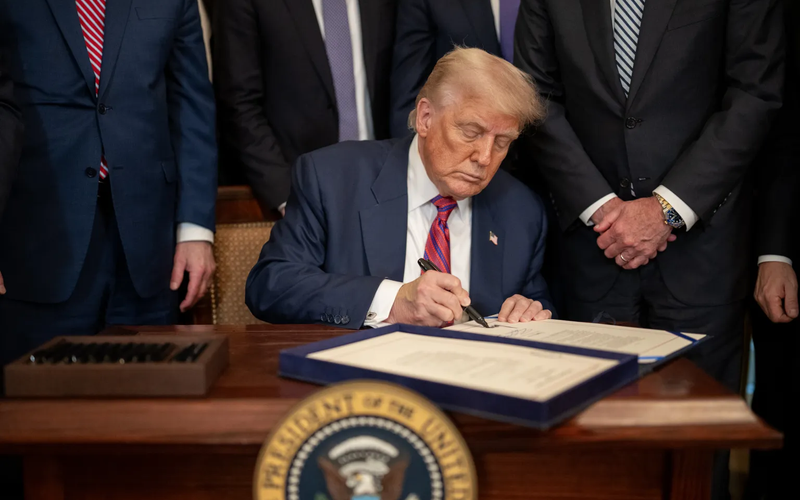
Leaders of the most powerful conferences in college athletics quickly voiced support for President Donald Trump’s executive order aimed at tightening oversight of the sport, while renewing calls for congressional action on athlete compensation and NIL rules.
Commissioners from the Big Ten, SEC, ACC, and Big 12 all released statements Friday expressing appreciation for the administration’s involvement, emphasizing the need for consistent national standards across college sports.
The executive order directs federal agencies to evaluate whether universities that violate updated rules on transfers, eligibility, and pay-for-play arrangements should remain eligible for federal funding. It also proposes a five-year participation limit for athletes, structured transfer rules, and a ban on certain booster-backed compensation models.
Big Ten Commissioner Tony Petitti praised the order and pointed to the bipartisan SCORE Act as a framework for reform, saying the legislation would help protect both academic and athletic opportunities, including those in women’s and Olympic sports.
SEC Commissioner Greg Sankey echoed the need for uniform national standards, stating that the order provides “important clarity” and calling on Congress to advance legislation that ensures long-term stability in college athletics.
Big 12 Commissioner Brett Yormark and ACC Commissioner Jim Phillips similarly emphasized that federal action is necessary, expressing optimism that momentum is building for legislative solutions.
At the center of the debate is the rapid rise of name, image, and likeness compensation following a 2021 Supreme Court ruling that reshaped the college sports landscape. Since then, NIL deals, particularly in football and men’s basketball, have surged, raising concerns about competitive balance and the sustainability of non-revenue sports programs.
The proposed SCORE Act, backed by the White House, would grant the NCAA limited antitrust protections, prevent athletes from being classified as employees, and restrict certain funding mechanisms for NIL payments.
The executive order builds on a prior directive issued in July and follows a White House roundtable with sports leaders focused on addressing the evolving challenges facing college athletics.
While conference leaders have aligned behind the effort, the future of any long-term reforms will depend on whether Congress can pass comprehensive legislation to address the rapidly changing landscape.

Comments
No comments yet. Be the first to share your thoughts.