
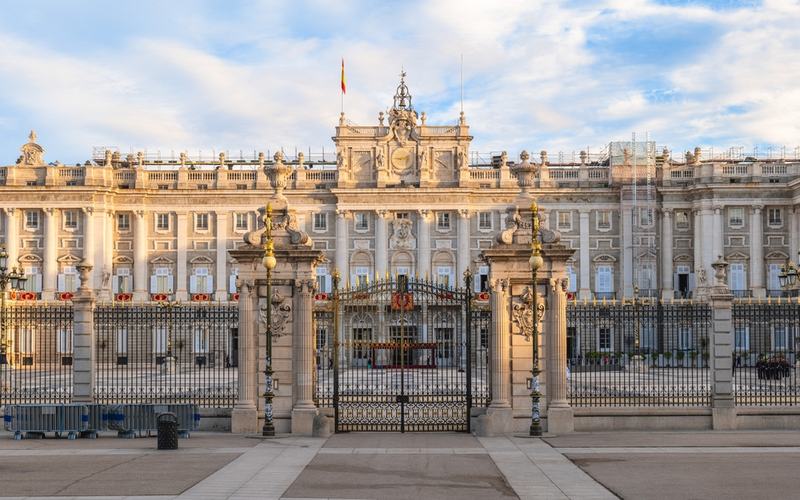
President Donald Trump threatened Tuesday to sever all U.S. trade with Spain, directing Treasury Secretary Scott Bessent to cut off dealings following Madrid's refusal to allow American forces to use key military bases for strikes on Iran.
Trump made the remarks during a White House meeting with German Chancellor Friedrich Merz, stating, "We're going to cut off all trade with Spain. We don't want anything to do with Spain." He added that Spain has "absolutely nothing that we need" and criticized its defense spending, which stands at 2.1% of GDP, far below his push for NATO members to reach 5%.
The dispute escalated after Spain denied permission Monday for U.S. aircraft at Naval Station Rota and Morón Air Base to participate in weekend U.S.-Israeli attacks on Iran. Spanish Prime Minister Pedro Sánchez condemned the strikes as an "unjustified and dangerous military intervention" outside international law, while Defense Minister Margarita Robles confirmed the bases were not used and must comply with bilateral agreements and UN frameworks.
In response, the U.S. relocated 15 aircraft, including Boeing KC-135 refueling tankers, from the southern Spanish bases to Ramstein Air Base in Germany. The Rota naval base and Morón air base have hosted U.S. forces since the 1950s under defense pacts, supporting NATO operations in the region.
Trump invoked the International Emergency Economic Powers Act (IEEPA) to justify an embargo, distinguishing it from recent Supreme Court limits on his tariff authority. U.S. Trade Representative Jamieson Greer indicated readiness to pursue actions for national security if directed.
Bilateral trade in 2025 reached $47.4 billion, with the U.S. exporting $26.1 billion in goods like crude oil and liquefied natural gas to Spain and importing $21.3 billion, including olive oil, auto parts and chemicals, yielding a $4.8 billion American surplus.
Spain responded defiantly, with officials stressing respect for international law, EU-U.S. trade deals and private sector autonomy. A government spokesperson said Madrid has resources to cushion any embargo effects and would advocate for free trade. Chancellor Merz warned Trump that Spain, as an EU member, cannot be singled out in trade negotiations, which occur collectively.
Sánchez is scheduled to address the issue Wednesday. Legal experts noted the high threshold for declaring Spain an "unusual and extraordinary threat" under IEEPA, questioning the feasibility amid ongoing NATO alliance ties.

Comments
No comments yet. Be the first to share your thoughts.