
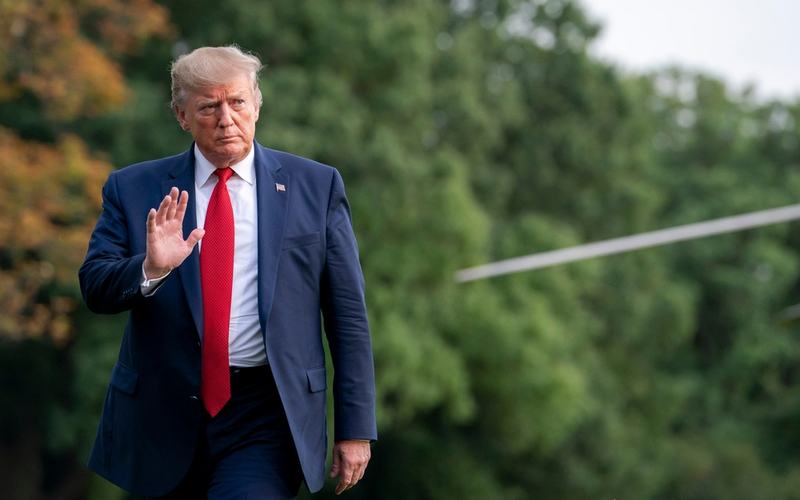
President Donald Trump stated on Monday that the Strait of Hormuz would be open 'very soon' and jointly controlled, hinting at a possible arrangement with Iran's leadership. Speaking to reporters in Washington, Trump said the waterway would be 'jointly controlled,' adding, 'Maybe me? Maybe me,' and 'Me and the ayatollah. Whoever the ayatollah is.'
The remarks came as Trump extended a 48-hour ultimatum he issued on Saturday, postponing potential U.S. strikes on Iranian power plants by five days to allow negotiations to continue. In the Truth Social post, Trump had warned that the United States would 'hit and obliterate' Iran's power plants if the strait was not fully reopened without threat.
The Strait of Hormuz, through which a fifth of the world's oil passes in peacetime, has seen shipping traffic virtually halt since early in the war, now in its fourth week. U.S. Central Command's Admiral Brad Cooper described the strait as 'physically open' but noted ships are avoiding it due to Iranian missile and drone attacks. Iran has allowed selective passage for vessels from neutral or friendly nations after coordination.
The conflict erupted on February 28 when U.S. and Israeli forces launched strikes on Iran following the collapse of nuclear talks involving Jared Kushner, Steve Witkoff, and Iran's Foreign Minister Abbas Araghchi. Iran retaliated by targeting the Strait and launching attacks on Gulf allies and Israeli cities. U.S. and Israeli operations have degraded Iran's missile capabilities, nuclear sites, and eliminated key scientists.
President Trump described the backchannel discussions as 'very good and productive,' with major points of agreement including Iran halting uranium enrichment. Negotiators Kushner and Witkoff have communicated with Araghchi through intermediaries like Turkey, Pakistan, and Egypt. Iran has denied direct talks, with its Foreign Ministry stating there is 'no dialogue' and parliamentary speaker Mohammad Bagher Ghalibaf dismissing reports as 'fake news.'
Iran warned it would target U.S. energy infrastructure in the region if attacked and vowed to keep the strait closed until damaged facilities are rebuilt. The International Energy Agency's head called the oil flow disruption a 'major threat' to the global economy, worse than the 1973 and 1979 crises, with 11 million barrels per day lost and prices up as much as 40 percent since late February.
U.S. stock indices fell last week amid the uncertainty, with the S&P 500 dropping over 1.5 percent. Trump's comments on talks briefly eased energy prices, though they have risen again without further progress.

Comments
No comments yet. Be the first to share your thoughts.