
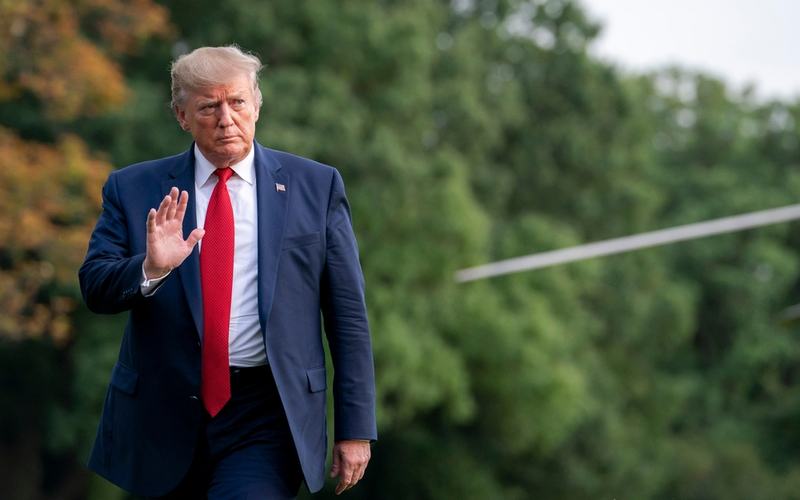
President Donald Trump is threatening to support election challengers against six House Republicans who joined Democrats in voting to reverse his tariffs on Canada, delivering a setback to his trade agenda on Capitol Hill.
The House passed the measure 219–211 after Democrats forced a vote using a privileged resolution, a procedural tool that can bring legislation to the floor over the objections of majority leadership. One Democrat, Rep. Jared Golden of Maine, voted with most Republicans against the resolution.
Shortly before the vote, Trump issued a warning on Truth Social aimed at Republicans in both chambers.
“Any Republican, in the House or the Senate, that votes against TARIFFS will seriously suffer the consequences come Election time, and that includes Primaries!” Trump wrote.
He defended his tariff strategy as a driver of economic growth and national security, arguing that trade deficits declined and markets reached record highs under his policies. Trump also maintained that tariffs strengthened America’s leverage abroad, saying even the prospect of tariffs has compelled other countries to meet U.S. demands.
The six Republicans who supported the measure were Reps. Dan Newhouse of Washington, Kevin Kiley of California, Don Bacon of Nebraska, Jeff Hurd of Colorado, and Brian Fitzpatrick of Pennsylvania. Some political calculations may blunt the impact of Trump’s warning: Newhouse and Bacon are not seeking reelection in 2026, and Trump has already endorsed a primary challenger against Rep. Thomas Massie, who has clashed with party leadership on trade and spending issues.
Kiley said the vote concerned whether the national emergency declaration tied to fentanyl trafficking from Canada should remain in effect. Under the National Emergencies Act, Congress must review such declarations every six months. Kiley argued that Canada had taken significant steps to address fentanyl flows, making an extension unwarranted.
Fitzpatrick emphasized constitutional concerns, noting that Article I grants Congress authority over foreign commerce and tariffs. He warned that expanding emergency trade powers could set a precedent future presidents might use in ways lawmakers would oppose.
Trump imposed an additional 25% tariff on most Canadian and Mexican goods in February 2025, with Canadian energy subject to a 15% tariff. The administration framed the move as a response to illegal immigration and illicit drug trafficking, particularly fentanyl, entering the United States.

Comments
No comments yet. Be the first to share your thoughts.