
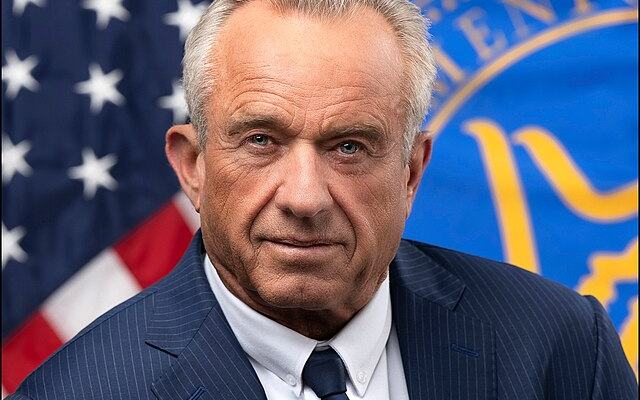
Health and Human Services Secretary Robert F. Kennedy Jr. on Friday suggested Americans facing rising beef prices look beyond premium steaks and consider less expensive options such as liver and other variety meats.
Kennedy made the remarks at an event hosted by MAHA Action, a political action committee backing the “Make America Health Again” agenda aligned with President Donald Trump’s broader health policy push.
“This is true all over the country. There's a lot of good food in grocery stores that goes away. Most of the cheap cuts of meat are very inexpensive,” Kennedy said. “If you buy, you know, a porterhouse steak, it is going to take you back [a few dollars]. You can buy liver or the cheaper cuts of steak that are very, very affordable.”
Federal consumer price data show the average price for a pound of ground beef in U.S. cities rose from $5.55 in January 2025 to $6.75 in January 2026, an increase of $1.20 per pound, or roughly 21.8%.
Beef liver and other variety meats are not widely consumed by American shoppers. The National Cattlemen's Beef Association has previously noted that demand in the United States for items such as liver, tongue, heart, kidney, stomach, and intestine remains minimal, with much of the market for those products coming from international buyers.
Kennedy’s comments come as HHS and the U.S. Department of Agriculture promote the newly released Dietary Guidelines for Americans, 2025–2030. The guidance emphasizes “Eat real food,” encouraging whole foods while limiting highly processed foods, added sugars, and refined carbohydrates.
Meanwhile, the Trump administration recently approved an additional 80,000 metric tons of lean beef trimmings from Argentina under tariff-rate quota adjustments, framing the move as a way to ease pressure on ground beef prices.
The import decision has drawn criticism from some ranching groups and Republican lawmakers. National Cattlemen's Beef Association CEO Colin Woodall said the plan “creates chaos at a critical time of the year for American cattle producers” and would do little to lower grocery store prices.
Sen. Deb Fischer argued that policymakers should focus on cutting red tape and lowering production costs for domestic ranchers rather than increasing imports.
Senate Majority Leader John Thune said lawmakers are monitoring the situation and remain in contact with the White House, the Department of Agriculture, and the U.S. Trade Representative as discussions continue.

Comments
No comments yet. Be the first to share your thoughts.