
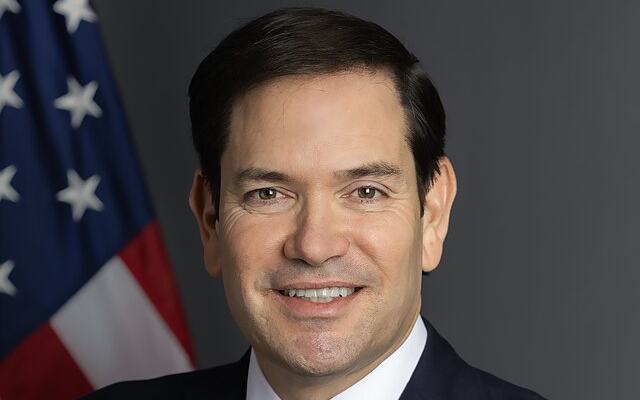
Secretary of State Marco Rubio accused China on Thursday of 'bullying' Panama by detaining or holding up dozens of Panama-flagged ships at its ports.
Rubio stated that China's actions destabilize supply chains, raise costs, and erode confidence in the global trading system. "The United States stands with Panama against any retaliatory actions against its sovereignty and will always support our partners in the face of bullying," he wrote on social media.
The accusations followed a sharp increase in detentions of Panama-flagged vessels in Chinese ports. Public data from the Tokyo MOU port state control organization showed that in March, 92 out of 124 detained ships, or nearly 75 percent, flew the Panamanian flag. These vessels were typically held for one to 10 days before release. That marked a rise from February, when 19 of 45 detained ships were Panama-flagged, and January, when 23 of 71 were.
A Lloyd's List Intelligence report indicated nearly 70 such detentions since March 8.
The spike came after Panama's Supreme Court ruled in late January that a 1997 concession granting control of the Balboa and Cristobal terminals on the Panama Canal to Panama Ports Company, a subsidiary of Hong Kong-based CK Hutchison Holdings, was unconstitutional. Panama seized the ports, and APM Terminals, a subsidiary of Denmark's A.P. Moller-Maersk, temporarily took over operations pending a new contract.
CK Hutchison, which had operated the ports for nearly 30 years, rejected the ruling and launched international arbitration seeking more than $2 billion in damages.
China denied the bullying claims. Liu Pengyu, spokesperson for the Chinese Embassy in Washington, said America's repeated allegations revealed its attempt to control the canal. Following the court ruling, Chinese Foreign Ministry spokesperson Guo Jiakun stated China would take all necessary measures to protect Chinese companies' interests.
Panama's government downplayed the detentions. Foreign Minister Javier Martínez-Acha Vásquez previously described the increase as part of routine maritime practices and expressed a desire to maintain respectful relations with China. Officials did not immediately comment on Rubio's remarks.
The U.S. Federal Maritime Commission has tracked the incidents. Chair Laura DiBella noted the commission was not aware of any other country recently conducting vessel safety inspections in a punitive manner.
The dispute reflects broader U.S. efforts to counter Chinese influence near the Panama Canal, which handles about 5 percent of global maritime trade. President Donald Trump has accused Beijing of controlling the waterway and threatened retaliation if Panama fails to reduce that sway. Panama recently exited China's Belt and Road Initiative.
Panama's ship registry, a major global player generating around $100 million annually for the government, faces potential risks from prolonged harassment, according to former Panama Maritime Chamber president José Digeronimo.

Comments
No comments yet. Be the first to share your thoughts.