
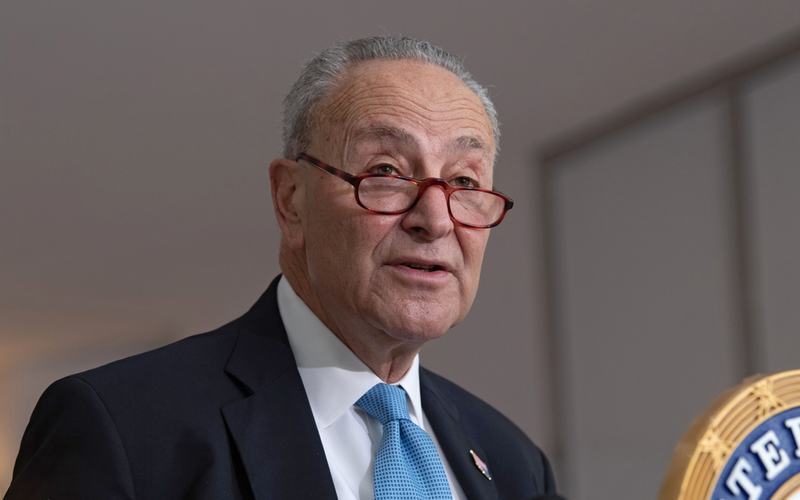
Senate Minority Leader Chuck Schumer declared late Thursday that he would support a Republican stopgap spending bill to prevent a government shutdown, marking a significant concession just hours before a midnight deadline.
Schumer's announcement came after days of internal Democratic debates over strategy against the Trump administration. He informed his caucus during a closed-door lunch and followed with a Senate floor speech, arguing that a shutdown would harm Americans and give unchecked power to President Trump and allies like Elon Musk.
The House-passed bill, a continuing resolution, would fund the government through September 30 at current levels with adjustments, including increased defense spending and cuts to non-defense programs. Republicans hailed it as a clean measure to buy time for full appropriations, while Democrats had pushed for a shorter 30-day extension with policy riders.
"While the CR bill is very bad, the potential for a shutdown has consequences for America that are much worse," Schumer stated, emphasizing the need to keep government operations running. His decision stunned some Democrats, echoing tensions from prior funding fights, but secured the 60 votes needed to advance the bill in the Senate.
President Trump praised Schumer on social media, calling his move one with "guts" that did "the right thing." House Minority Leader Hakeem Jeffries and former Speaker Nancy Pelosi expressed criticism, but Schumer brushed it off, prioritizing stability.
This comes amid ongoing partial shutdowns earlier in the year over Department of Homeland Security funding, where Democrats blocked GOP bills demanding reforms to immigration enforcement. However, with broader funding expiring tonight, Schumer opted against further escalation.
Lawmakers expect the Senate to pass the measure Friday on a simple majority after the cloture vote, sending it to President Trump for signature. The resolution provides breathing room to negotiate 12 full-year appropriations bills for fiscal year 2027.
The move underscores the delicate balance in a divided Congress, where avoiding disruptions to federal services, including pay for 2 million workers and operations at national parks, takes precedence over partisan demands.

Comments
No comments yet. Be the first to share your thoughts.