
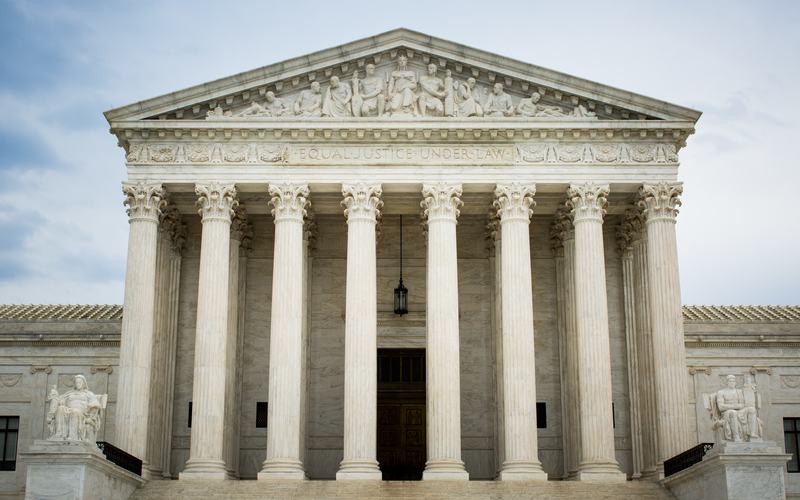
The U.S. Supreme Court is expected to rule soon in Louisiana v. Callais, a case that could reshape congressional districts across the South and influence control of the House in the 2026 midterms.
Oral arguments in the case took place on October 15, 2025, focusing on whether Louisiana's 2024 congressional map violated the 14th Amendment by prioritizing race to create a second majority-Black district. The map was drawn after a federal court found the state's prior map diluted Black voting power in violation of Section 2 of the Voting Rights Act. Challengers, including white voters, argued the new district amounted to racial gerrymandering.
Section 2 prohibits voting practices that discriminate based on race and has been used to require majority-minority districts where minority groups can elect preferred candidates. During arguments, conservative justices appeared skeptical of indefinite race-based remedies. Justice Brett Kavanaugh suggested such measures should have an endpoint, while Louisiana Solicitor General Benjamin Aguiñaga called Section 2 unconstitutional insofar as it demands race-based redistricting.
A ruling limiting Section 2 could invalidate similar districts nationwide, prompting Republican-controlled legislatures to redraw maps favoring their party. An Issue One analysis identified up to eight states, including Georgia, South Carolina, Tennessee, Missouri, and Florida, ready to act if the decision arrives by early March, potentially shifting 5 to 8 House seats.
Redistricting battles are already intensifying in nearly a dozen states ahead of the November 3 primaries and general election. In Missouri, lawsuits and ballot measures challenge GOP plans. Florida Democrats sue over Governor Ron DeSantis's proposed April redraw. New York courts favored Democrats for an extra blue seat, drawing Republican appeals. Similar fights brew in Utah, Wisconsin, Maryland, and Virginia.
The timing of the Callais decision is critical. States must finalize maps well before primaries, typically months in advance. A ruling in late February or early March could enable quick legislative action, while one in June likely would not affect 2026. As of March 2, the case remains pending, with no opinion date announced.
The stakes extend beyond Louisiana, where the contested 6th District elected Democrat Cleo Fields in 2024 under the stay. A narrow ruling might strike the map but preserve the underlying Section 2 violation finding, sending it back for alternatives. Broader curtailment of Section 2 could diminish minority representation in Congress.
Legal experts warn of chaos if maps are upended close to elections, complicating ballot preparation and voter outreach. Both parties prepare for prolonged uncertainty as midterms approach.

Comments
No comments yet. Be the first to share your thoughts.